“Deserts” Matthew 4:1-11 by Mark Stuckey 22nd February 2026

In a news story this week, one of the major grocery stores was heavily criticised for misleading their customers by changing their sale price of items on the shelf from what was advertised. This struck up a conversation between Loretta and I about how from time to time, the packaging of some items, such as potato chips packets have shrunk, but their prices remain the same as when they were in larger packets. I even mentioned that there is one less TimTam in a pack of TimTam’s as a further illustration of price gouging… to which Loretta responded, “Hmm I love a TimTam!”  

That afternoon Loretta went shopping after work and wouldn’t you know it one of her purchases was a pack of TimTam’s! In Loretta’s defence she said to me she just happened to walk down the biscuit aisle, the TimTam’s were on special and by the time she reached the other end of the aisle, a pack of TimTam’s had found their way into the shopping basket. 

Questions one must ask are:
Did my mention of TimTam’s in the morning tempt Loretta?
Was it the specials price tag on the shelf where the TimTam’s were in the biscuit aisle that tempted her?
Or, was it a combination of the two?

Temptations!

They exist in our lives!

They may be a yummy chocolate biscuit that we want to enjoy or advertising campaign that lures us in to say I want this, or I need that. 

This week we begin the Season of Lent. A season marked by prayer, fasting, reflection, and repentance. The liturgical colour has changed to purple. The alleluias have quieted. The church slows down on purpose. 

We begin Lent in the wilderness, another descriptive word for wilderness is desert.

Today, both our readings this morning speak of temptation, being tempted.  

When we turn to our gospel reading for this morning, Matthew 4:1-11, it is about Jesus being tempted by the evil one in the wilderness and ultimately resisting the temptations by relying on the word of God, demonstrating his obedience and faithfulness in the face of adversity. 

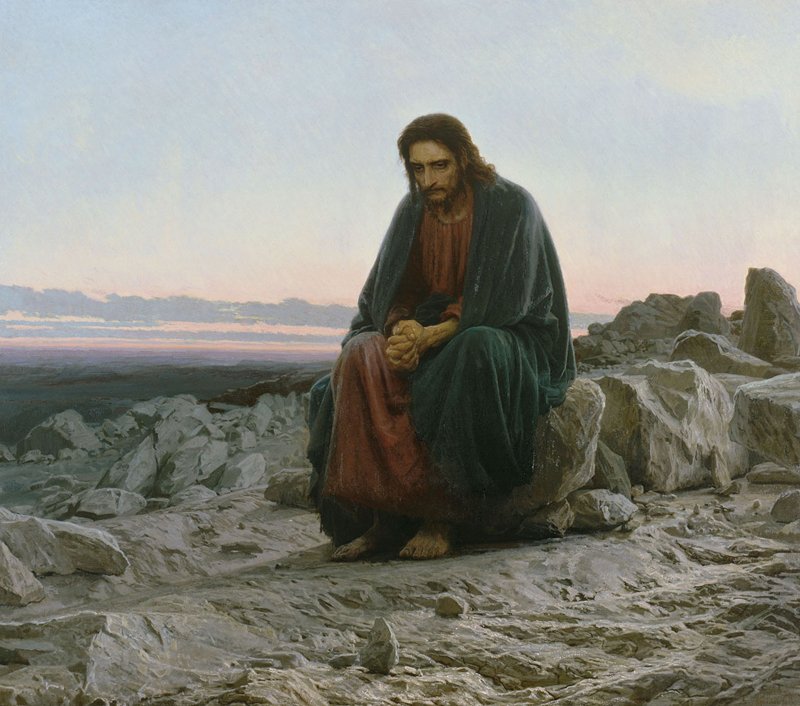
Picture it - we find Jesus in the wilderness fasting 40 days and 40 nights. The scene is stark and desolate; the terrain is rugged. Jesus is weary and hungry, is alone, vulnerable in this harsh environment. He is there preparing for his ministry, seeking spiritual clarity and strength through his time of fasting and prayer. The evil one enters the scene and tries to exploit Jesus’ vulnerable state through temptation offering him power, wealth, and worldly glory in exchange for his allegiance. Jesus, however, remains steadfast in his faith and commitment to God resisting all the temptations that were put to him by using wisdom and authority of scripture. It is a powerful demonstration of Jesus unwavering devotion to God and his ability to overcome temptation through the power of God's word. 

Imagine being in a situation where everything around you seems to be pushing you to give into temptation. For us this might be a busy work schedule, the demands of a family, a social life with friends who will try to entice us to focus on worldly things and make these our priority. 

Friends, Matthew 4: 1-11 teaches us the importance of relying on something greater than ourselves when faced with trials and temptations. Can I encourage each of us to think about that! Jesus not only shows us the value of knowing and internalising God's Word but also demonstrates how we can draw strength and guidance from it in our own lives. The passage also challenges us to reflect on how we respond to temptation - do we give in to our urges, enjoying a TimTam, or the desire to want something, but not necessarily needing it; or do we seek solace and wisdom in the teachings of our faith? Let us remember the example Jesus set in these verses as we navigate our own struggles and temptations. We should arm ourselves with the power of scripture and lean on our faith to guide us through these challenging times. We too can find strength and resilience in our beliefs, just as Jesus overcame temptation in the wilderness. 

To conclude I want to finish off with a reflection offered by Richard Rohr. It speaks into the heart of our Gospel reading this morning. In a week where I have been stretched with work, family, university and ministry responsibilities pulled in the direction and that direction, what spoke to me and resonated this week from the reflection as I prepared for today was the phrasing around being ‘transformed’, how our mind, our heart and our body can be transformed. Please make yourself comfortable, you may even like to close your eyes as I read the reflection. 

“The Lenten season always begins with the same Gospel of the temptation of Jesus in the desert. He has gone into the desert for forty days for his own initiation, as it were, and this is a beautiful telling of the demons we all have to face to grow up, to become mature.

The first two temptations are proceeded by the same phrase, “If you are the Son of God.” The primary temptation we all face is to doubt our Divine Identity. That’s what the evil one says to us, too: if you are a child of God. We can all think of a thousand reasons to condemn ourselves. The main temptation we have to overcome is the doubting of our identity. Once we doubt that, it’s all downhill from there. What made Jesus special, it seems, is that he never doubted he was God’s beloved son. 

The first temptation is to misuse power. Maybe we could say it’s a temptation to be spectacular, to be special, to be important, to be showy. The tempter says, “Tell these stones to become bread” (Matthew 4:3). When we’re young, we all want that. We all want to stand out. We want people to notice us. We want to be something special and to do something special, but Jesus refuses to play the game. 

Then a second temptation: “The devil took him to the Holy City and made him stand on the very pinnacle of the Temple” (Matthew 4:5), and tells Jesus to throw himself down. The second great temptation is to misuse religion by playing games with God. Jesus says, “I’m not going to play the religious game either.” It’s transactional religion as opposed to transformational. But what religion is about is real transformation. Changing our mind toward love, changing our heart toward community, changing our body toward living in the present moment. 

The third temptation is the temptation to political power. It’s not inherently wrong. There has to be a way we can use power for good. But until we’re tested, and until we don’t need it too much, we will almost always misuse it. If we’re not tested in the ways of power, very often we end up worshiping power to have power. 

What religion at its most mature level means is that there is one goal. There is one source. There is one focus. There is one meaning. It’s not about making more money. It’s not about being famous. It’s not about winning. What we were given in the Gospel is an agenda in which everybody wins. We’re all equally children of God.” 

Friends, life throws tests at us just like our demanding jobs and family obligations. Jesus stood strong against temptation in the wilderness. Just as he relied on his faith in God's word, we too can find strength in our beliefs. Are you prepared to tap into that same power and remain steadfast when life's challenges try to break you? 

References
Adapted from Richard Rohr, “All Must Be Tested in Regard to Their Use of Power,” homily, March 1, 2020 https://cac.org/daily-mediations/testing-in-the-desert-2023-03-03/

 

Desiree Snyman
Matthew 5. Faithfulness, Dignity, and the Courage to Protect by David Angus 15th February 2026

Now I know it’s Transfiguration Sunday- but this year there are not enough weeks for Epiphany 6 and the Transfiguration – so the lectionary gave both options- I chose Epiphany 6-to continue with the ‘Sermon on the Mount’. 

Today I want to speak about Divorce- not an easy topic for the Church — especially since the 1970s, when Justice Lionel Murphy introduced No-Fault Divorce into Australian law. Churches wrestled deeply with what the new laws meant for marriage, for Scripture, and for faithfulness.

Cath and I were married on the 6th of December 1980, on the outskirts of Sydney. We were young enthusiastic Christians (singing Christian’s songs on the street) and we met studying the bible at Sydney Missionary and Bible College. We were what some might call fundamentalist Christians. We believed the Bible contained no error, and we read it literally as our guidebook for life. 

So naturally the sermon at our wedding was from Ephesians 5:

“Wives, submit yourselves to your own husbands as you do to the Lord… For the husband is the head of the wife as Christ is the head of the church… Husbands, love your wives, just as Christ loved the church and gave himself up for her.” 

Needless to say, Sylvia — my mother-in-law — and not a churchgoer but a strong advocate for feminism, was not impressed. When we walked out of the church she turned to my mother and said, “oh How could they believe that?” My brethren mother calmly replied, “oh we let them have their little delusion. We know how things really are.” 

As life goes on, our understanding of Scripture deepens- broadens. 

Last year, when I was standing in for Desirée, all Licensed Lay Ministers were asked to complete training in Domestic Violence awareness. During that course I was confronted by some sobering statistics. In fact, I was shocked-A study by the Anglican Church of Australia found 38% of the general Australian population reported experiencing intimate partner violence (Domestic Violence) in their lifetime. That’s a lot 38% of Australians.  But it gets worse.  When they surveyed Anglicans- it rose to 44%. 

It gets more disturbing, some perpetrators (of DV) reportedly used biblical teaching to justify their behaviour. Possibly either the Ephesians ref to ‘wives submitting’ or where the book of common prayer promises to ‘love and obey’. 

Sobering statistics to reflect on. Violence in relationships is not theoretical. It is real. 

Today’s words from Matthew 5 — (from the Sermon on the Mount) are not comfortable words. Jesus rarely offers comfort that allows injustice to remain unchallenged. Instead, when there is injustice- he invites transformation — of hearts, relationships, and communities. 

In this passage, Jesus speaks about divorce. But if we only listen with old rigid ears, we may miss what the Spirit is saying to the Church today. 

In Jesus’ time, a woman could easily be dismissed —divorced, cast aside — Similarly in Islam- the husband just had to say “I divorce you“ x 3. 

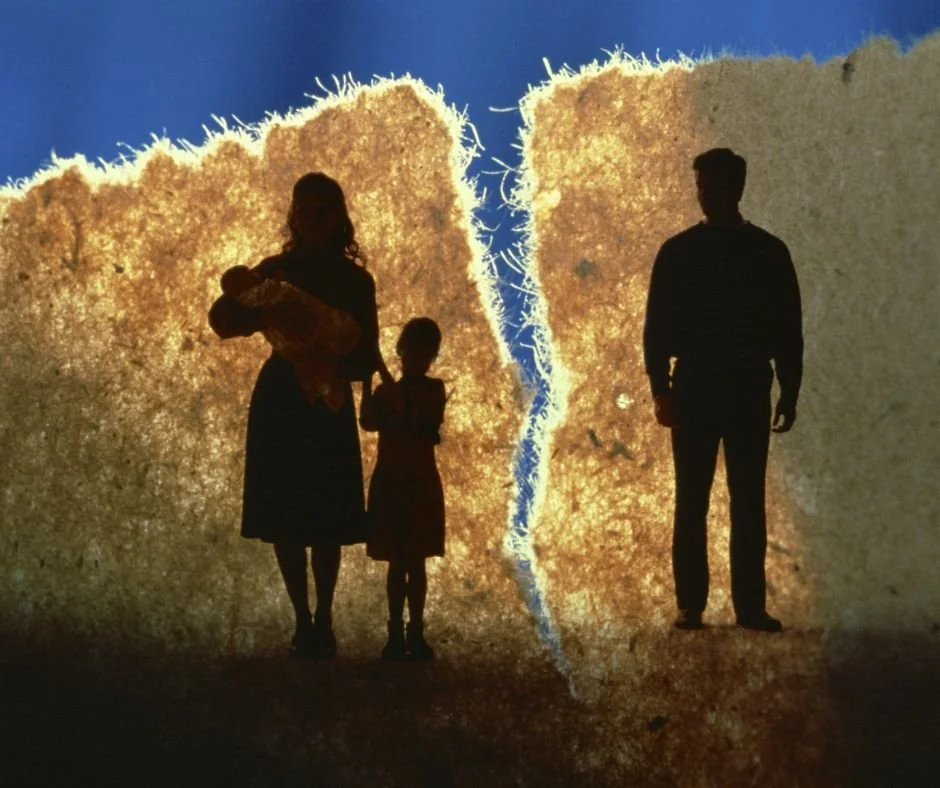
Divorce had devastating consequences. Divorce was not simply the ending of a relationship. For women it often meant poverty, social exclusion, and a vulnerable life. When Jesus addresses divorce, he is not endorsing suffering. He is confronting a system that allowed the powerful to discard the powerless. 

And remember: Jesus was a practising Jew. Matthew’s Gospel presents him clearly as a Torah-keeping Jew speaking to Jewish Christians. “Not one jot or tittle,” he says, “will pass from the Law.” Hebrew is a consonantal language — without the smallest markings, the meaning shifts entirely. Jesus affirms the law. 

But Jesus also says, “Unless your righteousness exceeds that of the scribes and Pharisees…” and the scribes and Pharisees were the meticulous law-keepers.         So, what is he really saying? 

Jesus is pointing beyond mere rule-keeping- to the heart behind the law.  

So- What is the purpose of Scripture? What lies behind the commandments?  

The Love of God and love of neighbour.  The Beatitudes set the tone: mercy, humility, and a hunger for righteousness. 

Some in Jesus’ day followed the letter of the law but neglected its spirit. Divorce was permissible; therefore, it was justified. 

But Jesus asks: what about the person harmed? What about her dignity?  What about her safety?

And so, the deeper truth emerges:

God does not bless relationships that destroy the dignity of another. 

Let me say that again,

God does not ask anyone to remain where they are unsafe.

Our God is not a God of terror. Not a God of bruises hidden beneath sleeves. Not a God of whispered fear in one’s own home.

Our God is a God of liberation. 

Throughout Scripture, whenever people are oppressed, God acts toward their freedom. From Egypt to exile, from the margins to the cross — the story of God is the story of rescue.

So, when we speak of relationships, we must speak honestly about domestic violence. 

It exists.

It wounds,

And — with humility — we must confess that the Church has not always responded as it should. 

There were times when silence felt easier than truth.

Times when preserving appearances seemed more important than protecting the vulnerable.

Times when Scripture was misused in ways that trapped people rather than freed them. 

But hear this clearly:

The Gospel never sides with abuse. Never.

If anyone is experiencing harm, coercion, intimidation, or violence — this is not a cross for them to bear. Christ bore the cross so that you might live in freedom.                                          

Desiree Snyman
Still Salty, Still Shining (With a Bit of Holy Trouble) by David Angus 8th February 2026

Still Salty, Still Shining (With a Bit of Holy Trouble)

Matthew 5:13–16

Jesus has a way of sneaking up on us. He looks out at a crowd of perfectly ordinary people—people with sore backs, complicated families, and strong opinions about how things are- and used to be—and he says: 

“You are the salt of the earth.

You are the light of the world.” 

Not you might be.

Not once upon a time you were.

But you are. 

Which is both a comfort… and, if we’re honest,… a little alarming. 

Because salt, you see, is useless if it stays in the shaker. It’s Very tidy on the shelf. Very polite. But completely irrelevant. And Jesus has absolutely no interest in polite irrelevance. 

Salt exists to be scattered. And yes—sometimes it gets rubbed into places we would rather not talk about. (Have you ever put salt on a wound? Not exactly a warm relaxing experience.) But it heals. It preserves. It tells the truth about what is happening before decay sets in. 

Phrases about salt have entered our everyday language.  People are described as “Salt of the earth” – what does this mean? (according to google). Salt of the earth people are:

•         Honest and Reliable: They are dependable, and often described as genuine and straightforward.

•         Humble and Down-to-Earth: They are not pretentious- they don’t think they are special or better than anyone else.

•         Strong Moral Fiber: They are often seen as "pure" or good. ( having a sound, moral character)

•         Hardworking: salt of the earth people have a strong work ethic, often from the working class.

•         Kind and Helpful:  salt of the earth people are often caring, loyal, and willing to help others in time of need. 

And light—ah! Light is even more troublesome.  

Light exposes things. Have you ever looked towards a window and seen dust in the air? That pile of dust in the corner we were hoping no one would notice. Light does not come to flatter us. It comes to free us. 

You see, for some of us- there is a lie floating around our culture. It says:

“At a certain age, you step aside. You become quieter. You stop stirring the pot and making trouble.” 

But the gospel says something quite different. 

The gospel says: those who have walked longest with God are often the most dangerous— dangerous to the unjust, to the cruel, to those peddling despair. 

Why? 

Because you have seen promises broken and still chosen hope.
You have buried loved ones and still chosen love.
You have seen the world wobble in turmoil and still get up in the morning. 

Having lived and experienced life- does not qualify you to retire in a life of faith- it is not retirement material. It is actually prophetic training. We are all being trained as ‘prophets’ to the world we live in. 

Let’s be clear—Jesus does not call us salt - so that we can make peace with blandness, to be bland in this world. Jesus does not call us light so that we can politely dim ourselves for the comfort of others. 

If our faith never irritates anyone, we may want to check whether it has any flavour left. 

Now, I know—some of us may say, “But I am tired.”
And God says, “Then sit down—and shine anyway.” 

Some of us may say, “I don’t recognize the world anymore.”
And God says, “Good. That means you remember how it ought to be.” 

Your light does not have to be loud. It does not have to be trendy.
Your light shines when you refuse to harden your heart.

When you tell the truth kindly
When you say, “This is not who we are,” and mean it. 

And yes—sometimes being salt and light will make you unpopular. But remember: Jesus was not crucified for being vaguely pleasant. 

He was crucified because light walked straight into the darkness and refused to apologize. 

So, friends, do not hide your light under nostalgia. Do not tuck your salt away for special occasions. This world is hungry. Our world is stumbling around in the dark. And God, in a fit of divine confidence, has decided to use us- each of us. 

Which just proves that God has a wonderful sense of humour. 

There are so many in the bible and human history who gave their best when they were old: 

Biblical Examples

•         Abraham: Embarked on a new journey of faith at age 75 and became a father at 100.

•         Moses: Called by God to lead the Israelites out of Egypt at 80 years old.

•         Anna and Simeon: Elderly individuals who worshipped in the Temple and recognized the infant Jesus as the Messiah, with Anna fasting and praying for decades.

•         The Apostle John: Outlived the other apostles, serving as a leader and writing the Book of Revelation in his old age. 

Historical and Early Church Figures

•         Polycarp of Smyrna (c. 69–155 AD): A disciple of the apostle John, he was martyred at age 86. He is remembered for his unwavering faith and kindness to his captors in his final hours.

•         John Chrysostom (c. 347–407 AD): Known as "golden-mouthed" for his powerful preaching, he continued to fearlessly speak truth to power in his older years.

•         John Newton (1725–1807): The author of "Amazing Grace" continued to preach and marvel at God's grace well into his old age, long after his time as a slave ship captain. 

Modern Era (19th–21st Century)

•         Billy Graham (1918–2018): Preached to millions globally for over four decades, continuing his ministry and influence well into his 90s.

•         Corrie ten Boom (1892–1983): After surviving a Nazi concentration camp, she traveled the world in her later years to share messages of forgiveness and God's love.

•         George Müller (1805–1898): Ran orphanages in England for 10,000 children, relying on faith and prayer for funding, and continued traveling to preach in his 70s and 80s.

•         Mother Teresa (1910–1997): Founded the Missionaries of Charity and received the Nobel Peace Prize in 1979 at age 69, continuing her work with the poor until her death.

•         Dr. Catherine Hamlin an Australian Anglican doctor who worked as a doctor in Ethiopia confronting the practice of marrying teenage girls. Who trained medicos to repair the resulting fistulas which came about from having babies when they were too young. Cath and I heard her speak and she was well into her 80’s and still going strong. 

And so many from our own parish who have been salt and light and ministering God’s love in their later years. We remember Lyn Watt, Barry Campie and Dell Ezzy. You are the salt of the earth. You are the light which cannot be hid.

Closing Blessing 

And now, may the God who calls you salt give you courage to be flavourful.
May the God who calls you light give you joy in shining—especially where it is needed most.
May your wisdom refuse to be silent.
May your compassion refuse to grow tired.
May your laughter confuse the powers of despair.
And when the world tells us that our time has passed,
may we hear God laughing gently and saying,
“Oh no, my dear—we are not finished yet.”

Go in peace.
Go in hope.
Go and shine.

Amen. 

Desiree Snyman
Micah 6:8 & The Beatitudes by David Angus 1st February 2026

Sermon – Micah 6:8 & The Beatitudes

Imagine landing in another country and going to a currency exchange.

You hand over your Australian dollars, and they give you completely different-looking notes back. Same paper, different colours, different symbols, different values. 

If you tried to spend your Australian money in that new country, it wouldn’t work. It simply doesn’t hold value there. 

Jesus says the Kingdom of God is like living in a different country. The currency is different. What counts as wealth, success, and strength is completely redefined. 

In our world, power, image, and self-promotion are valuable currency.

In Jesus’ kingdom, humility, mercy, and peace making are what count. 

The Beatitudes are Jesus handing us new currency and saying,

“This is what has value where I come from.”

One of my favourite verses in the Bible beautifully sums this up:

“What does the LORD require of you but to do justice, to love kindness, and to walk humbly with your God?” — Micah 6:8

That’s it. That’s the life of faith in one sentence.

And yet, if we’re honest, that kind of life can make us feel a bit… different. Like the odd ones out. 

As people who put our faith in Jesus Christ, we are different — not because we think we’re better, but because we are shaped by different values. We are called to live lives marked by justice, kindness, humility, and a living relationship with the Creator. 

But the world around us often celebrates very different values.

Instead of justice, we hear: “It’s my rights.”

Instead of kindness: “Look after yourself first.”

Instead of humility: “Promote yourself. Be noticed. Be admired.”

It can feel like, day by day, we are drifting further from Micah’s vision: to do justice, love kindness, and walk humbly with our God. 

The Values of a Different Kingdom

Jesus describes this different way of living in the Beatitudes. What are they?

They are not rules. They are not commandments. They are descriptions of the kind of people who belong to the Kingdom of God — what we might call the Commonwealth of Jesus. 

And when we place them alongside the values of our society, the contrast is sharp. So, let’s try flipping them — turning Jesus’ words into what today’s world often seems to reward. 

Of Power and Self-Importance

Happy and successful are the arrogant, for they push others aside to get what they want.

Happy and successful are the strong and unyielding, for might makes right.

Happy and successful are those who promote themselves loudly, for they will be noticed and admired. 

Of Success Without Compassion

Happy and successful are the callous, who don’t let other people’s pain slow them down.

Happy and successful are the ruthless, for no one stands in their way.

Happy and successful are those who bend the rules and don’t get caught, for they are admired for their cleverness. 

Of Wealth, Influence, and Image

Happy and successful are the deceitful and corrupt, for they will be rich and powerful.

Happy and successful are those praised by the media for their wealth and influence, for they shall be celebrities.

Happy and successful are you when others applaud your achievements and power — rejoice, for your reward is now, and the world will remember your name. 

Violence and Domination

Happy and successful are the warmongers, for history will call them great.

Take a breath.

That’s the air our culture breathes. And if we’re not careful, we breathe it too.

________________________________________

Not Rules — A Changed Heart

When I was growing up in church, there was a lot of talk about being “separate from the world.” But often that meant outward rules — what you wore, where you went, what you watched.

But Jesus goes much deeper than behaviour. The Beatitudes are not about external rules. They are about the attitudes of the heart. 

Paul calls this way of life “the word of the Cross.” Why? Because these attitudes — humility, mercy, peace-making, self-giving love — led Jesus to the cross. They are beautiful, but they are not safe. They challenge every power structure built on pride, violence, and control. 

When we become followers of Jesus, our values don’t just improve — they transform. We die to the old life of endless consuming, climbing, competing — and God reshapes us into something new. 

We begin to live in Christ, shaped by his heart.

But it’s so easy to drift. To slowly swap the values of Jesus for the values we see on screens, in politics, and in our own ambitions.

So we have to ask:

What do I really value?

What actually drives the way I live?

________________________________________

The Shape of a Beatitude Life

If the world clusters its values around power, image, and success, Jesus clusters his around something very different. 

Of Dependence on God

“Blessed are the poor in spirit.”

This is about knowing we need God. It’s a loosening of our grip on money, status, and self-sufficiency. We don’t stand before God as achievers, but as receivers. 

Of Tender Hearts in a Hurting World

“Blessed are those who mourn.”

“Blessed are the merciful.”

This is the refusal to become numb. It means allowing ourselves to feel the pain of the world and respond with compassion, forgiveness, and care. 

Of Humble Strength

“Blessed are the meek.”

This is not weakness, but strength under control. People who don’t need to dominate or prove themselves, because they are secure in God’s love. 

Of A Passion for What Is Right

“Blessed are those who hunger and thirst for righteousness.”

A deep longing for justice and integrity. We see this in those who stand with the poor and refugees, who advocate for the oppressed, who quietly and persistently work for what is right. 

Of Single-Hearted Love

“Blessed are the pure in heart.”

A life with no hidden agenda. Loving others not to impress, control, or gain advantage — but simply because they are loved by God. 

Of Bringing Peace in a Violent World

“Blessed are the peacemakers.”

People committed to reconciliation, who resist hatred and refuse to treat enemies as less than human. 

Of Courage to Stay Faithful

“Blessed are those who are persecuted for righteousness’ sake.”

Because living this way will sometimes bring opposition. Courage is part of the Christian life. 

These are the values of the Commonwealth of Jesus. And history is full of ordinary believers who took these words seriously — and paid a price.

What does a Life lived by the Beatitudes Look Like? 

Jean Donovan was someone who lived by the Beatitudes.

Jean was a young laywoman from the United States who felt called in her walk with the Lord to serve the poor. She joined a mission team in El Salvador during a time of terrible violence and civil war. Alongside Sister Dorothy Kazel and others, she worked with refugees, helped the hungry, drove the sick to medical care, and even helped bury those killed by death squads. 

She was deeply moved by the preaching of Archbishop Óscar Romero, who spoke courageously for the poor and oppressed. When Romero was assassinated, Jean and Dorothy kept vigil beside his coffin through the night. 

Jean knew the danger. She wrote to a friend:

“The Peace Corps left today and my heart sank low. The danger is extreme and they were right to leave… I have decided not to leave. The children, the poor, the bruised victims of this insanity — who would care for them? Whose heart could be so staunch as to favour the reasonable thing in a sea of their tears and loneliness? Not mine, dear friend, not mine.”

Eight months later, Jean Donovan and Sister Dorothy Kazel were murdered.

That is what the Beatitudes can look like in real life. Not safe. Not comfortable. But radiant with the heart of Christ.

So How Do We Live This Way? 

Hearing a story like that, we might think, I could never be like that.

But the Beatitudes are not a list we achieve by trying harder. They are the fruit of a life lived close to God. 

Micah told us the secret all along:

“Walk humbly with your God.” 

We grow into Beatitude people by walking with God — in prayer, in Scripture, in worship, in quiet conversations with him throughout the day. As we walk with Christ, his heart slowly becomes our heart.

The question is not, “Am I good enough?”

The question is, “Am I walking with God?”

Because if we walk with him long enough, we will begin to look like Jesus — doing justice, loving mercy, and walking humbly with our God. 

Closing Prayer
Lord God,
You have shown us what is good.
You have told us what you require:
to do justice,
to love mercy,
and to walk humbly with you. 

We confess how easily we absorb the values of the world around us —
the hunger for recognition,
the fear of missing out,
the temptation to look after ourselves first. 

Shape our hearts by the heart of Christ.
Make us poor in spirit,
tender toward the pain of others,
gentle in strength,
hungry for righteousness,
rich in mercy,
pure in love,
and brave in peace making.
Teach us to walk with you each day,
so that, step by step,
your kingdom’s values become our own.
We ask this in the name of Jesus,
who lived the Beatitudes perfectly.

Amen.


Desiree Snyman
Australia Day by Doug Bannerman 25th January 2026

In my lifetime, less than a hundred years, the skies of my homeland have darkened to the point where the milky way is barely visible on a supposedly clear night. The climate has changed, and democracy is shredding. Oddly enough, Australia is lucky to have the most robust democracy in the world, thanks to compulsory voting and the preferential counting system. 

In the lifetime of Australian First Nations People, some 65,000 years, they developed ongoing spiritual and cultural connections to the land and sea for thousands of generations. That led to a sophisticated culture and civilisation; and they can be accounted as Australia’s first explorers, navigators, engineers, farmers, botanists, scientists, diplomats, astronomers and artists – a culture all but destroyed by an imperialist occupying power. 

65,000 years has been long enough for First Nations People to be able to read and hear the land, also known as Country (capital C). They can feel the heart of Country, be aware of her breathing. Deep listening for First Nations people arises from a seamless integration with Country. It is not a skill; it is a way of being. 

Today is Aboriginal Sunday, the Sunday before Australia Day. The antecedents of Australia Day go back a long way. In the early 19th century, Sydney celebrated “Foundation Day” on 26 January. As the other colonies were established, they celebrated their own foundation days.  

In 1901 the primary national holiday, the late Queen Victoria’s birthday, was renamed “Empire Day”, celebrated on May 24. The last celebration of Empire Day in Australia took place in 1958, when it was renamed Commonwealth Day. Commonwealth Day is still observed by Australian state governors and the governor-general. 

By 1935, the states all agreed to use the name Australia Day and celebrate it on January 26. 

Meanwhile a parallel process of activism dominated by Uncle William Cooper (born in 1860 or 1861), together with Uncle Jack Patten, Uncle William Ferguson, Aunty Pearl Gibbs, Aunty Marg Tucker, were seeking justice for the indigenous peoples of Australia. Cooper was familiar with the indigenous rights movements in North America and New Zealand.  

His long campaign for Aboriginal rights, especially land rights, began with the Maloga Petition to the Governor of New South Wales in 1887. He and ten others signed the petition, which, amongst other things, held that local Aboriginal people should be granted sections of land not less than 100 acres per family in fee simple (a permanent and absolute tenure in land with freedom to dispose of it at will), or else at a small nominal rental annually with the option of purchase at a later date. The governor turned down that petition.  

Much, much later in 1933, after decades of relentless letter writing, Cooper and others mounted a petition to the King. Despite active obstruction from the national and state governments of the day, the petition was finally submitted to the commonwealth government in August 1937. However, Joseph Lyons and his cabinet thwarted that initiative. On a technicality.  

Responding to the many failures of democratic means to gain justice for First Nations people, Cooper's Australian Aborigines' League, together with Jack Patten and William Ferguson from the Aborigines Progressive Association, arranged a Day of Mourning to commemorate the sesquicentenary of colonisation, on Australia Day, 1938. 

But there still remains unfinished business. 

We, here, now, acknowledge the elders of the Bundjalung Nation who continue to, and will always, care for these lands; and, I hope, we seek to hear their voices, listen to their stories, respect their wisdom, and respond adequately to their pleas for justice.’ 

I have often commented to you on my personal response to the Uluru Statement from the Heart, as being the most graceful, peaceful and courteous document of its kind. The response to the statement was hardly that. 

This long weekend of Australia Day, dozens of events will be held around the country by First Nations communities, families and allies to commemorate the day, also known by Aboriginal and Torres Strait Islander peoples as Survival Day or the Day of Mourning. 

I am very interested to note that, almost without exception, the planners of these events are inviting people to come together peaceably, using words like yarning, reflection, listening, understanding, reconciliation, remembering, justice, truth telling, peaceful protest, connecting, respect, strength, honouring, and solidarity, together with smoking ceremonies, music, dance, art and the inevitable picnicking. 

We are a multicultural country with strong populations of differing faiths and ethnicity. So, although today I am addressing the particular issues of First Nations people, what I have to say has a universal appeal. Cosmic, in fact. For however we as individuals or communities might identify ourselves, our origins are undeniably cosmic.  

Glenn Loughry wrote last week, with regard to the Bondi killings,

‘For Aboriginal people, the past is not past; it remains present in Country, in memory, and in ongoing structural harm. Any claim about “national shame” that overlooks this reality risks reinforcing the very exclusions it seeks to condemn. We do not honour today’s victims by forgetting yesterdays. We honour them by refusing selective memory — by insisting that grief, accountability, and truth apply to all, not just to some.’ 

In similar vein Elie Wiesel spoke of a World War 2 occasion in his acceptance speech for the 1986 Nobel Peace Prize. 

‘I remember. It happened yesterday or eternities ago. A young Jewish boy discovered the kingdom of night. I remember his bewilderment; I remember his anguish. It all happened so fast. The ghetto. The deportation. The sealed cattle car. The fiery altar upon which the history of our people and the future of mankind were meant to be sacrificed. 

‘He asked his father: “Can this be true?” This is the twentieth century, not the Middle Ages. Who would allow such crimes to be committed? How could the world remain silent? 

‘And now the boy is turning to me: “Tell me”, he asks. “What have you done with my future? What have you done with your life?” 

‘And I tell him that I have tried. That I have tried to keep memory alive, that I have tried to fight those who would forget. Because if we forget, we are guilty, we are accomplices. We could not prevent their deaths the first time, but if we forget them, they will be killed a second time. And this time, it will be our responsibility. 

‘And then I explain to him how naive we were, that the world did know and remained silent. And that is why I swore never to be silent whenever and wherever human beings endure suffering and humiliation. We must always take sides. Neutrality helps the oppressor, never the victim. Silence encourages the tormentor, never the tormented. Sometimes we must interfere. When human lives are endangered, when human dignity is in jeopardy, national borders and sensitivities become irrelevant. Wherever men or women are persecuted because of their race, religion, or political views, that place must – at that moment – become the centre of the universe.’ 

We are a multicultural country. Surely, we cannot avoid being aware of injustice and suffering crying out for our attention: victims of hunger, of racism, and political persecution, writers and poets, prisoners in many lands governed by the Left and by the Right. Human rights are being violated on every continent. More people are oppressed than free. And it is happening on our own doorstep. The doorstep of, possibly, the most functional democracy in the world. Shameful. 

I hope that Australia can respond adequately sooner rather than later. But that requires a profound cultural and political change that big money resists. Imperialism has given way to mammon. But who is protesting? And how? 

We need to speak up in whatever way we can. And yet such speaking must be irenic, peaceful, devoid of the antagonism that marks parliamentary debate and some protest marches and gatherings.  

A Franciscan Blessing. 

May God bless us with discomfort at easy answers, half-truths and superficial relationships. May God bless us with anger at injustice, oppression and exploitation. May God bless us with enough foolishness to believe that we can make a difference in this world, doing in God’s name what others claim cannot be done. Amen. 

Doug Bannerman.

Desiree Snyman
Where is God at play in your life? 18th January 2026

The season of Epiphany is a time to celebrate the light breaking into our lives. Epiphany is when we recognise that God is not confined within Godself but breaks forth into creation as love. We call this the incarnation, when God continually breaks into history and does a new thing. In the southern hemisphere, this is our summer. We live, laugh, and play in the sun. In enjoying the sun, we celebrate the ways light enters our lives. 

In Epiphany, we also bring our gifts and offer them to God in Christ. The best gift we can offer God is the gift of ourselves. We offer ourselves to the mystery that is God, even when we do not fully understand, because we know that, through God, we are no longer the people we used to be. 

Thomas Merton describes an Epiphany surrender:

What is serious to men is often very trivial in the sight of God. What in God might appear to us as “play” is perhaps what he Himself takes most seriously. At any rate, the Lord plays and diverts Himself in the garden of His creation, and if we could let go of our own obsession with what we think is the meaning of it all, we might be able to hear His call and follow Him in His mysterious, cosmic dance. We do not have to go very far to catch echoes of that game, and of that dancing. When we are alone on a starlit night; when by chance we see the migrating birds in autumn descending on a grove of junipers to rest and eat; when we see children in a moment when they are really children; when we know love in our own hearts; or when, like the Japanese poet Bashō, we hear an old frog land in a quiet pond with a solitary splash—at such times the awakening, the turning inside out of all values, the “newness,” the emptiness and the purity of vision that make themselves evident, provide a glimpse of the cosmic dance. 

For the world and time are the dance of the Lord in emptiness. The silence of the spheres is the music of a wedding feast. The more we persist in misunderstanding the phenomena of life, the more we analyse them into strange finalities and complex purposes of our own, the more we involve ourselves in sadness, absurdity, and despair. But it does not matter much, because no despair of ours can alter the reality of things, or stain the joy of the cosmic dance which is always there. Indeed, we are in the midst of it, and it is in the midst of us, for it beats in our very blood, whether we want it to or not. 

Yet the fact remains that we are invited to forget ourselves on purpose, cast our awful solemnity to the winds, and join in the general dance.
[Thomas Merton, New Seeds of Contemplation (Shambhala: 2003), 302–303.] 

Merton sees God at play in the sacred manuscript of nature:

·      In the solitary splash of a frog in a pond, as the poet Bashō hears

·      In witnessing children play

·      In the silent presence of the sun, moon, and stars

He also sees God at play in the experience of love, in “micro” awakenings when our values are turned inside out, in moments of newness, and in moments of complete emptiness. 

Where is God at play in your life? Where have you seen God at play in the past? What does it take for you to join the general dance and abide in God? The fact that you are here today, or reading these words, means that something has stirred within you. Do not break faith with your awakened heart.

I recall one such moment when I was arrested by God. I ministered in Johannesburg, a chaotic, beautiful, hectic city. On my way to a meeting, I was caught in a traffic jam, frustrated, with tension rising because I was late and there was much to do. When it rains, people’s driving skills seem to vanish. In the midst of this tension, Samuel Barber’s Adagio for Strings played on the radio. The beauty of the music overcame me. Why do I spend so many of my waking hours trapped on the outer edge of the richness of life I am living? Why do I let the centrifugal force of daily demands spin me away from the centre of love that is always holding me? And yet, I also knew that, in this moment, it was not that something more was given to me. Rather, a curtain opened, and the infinite love that has always been given to me touched me. 

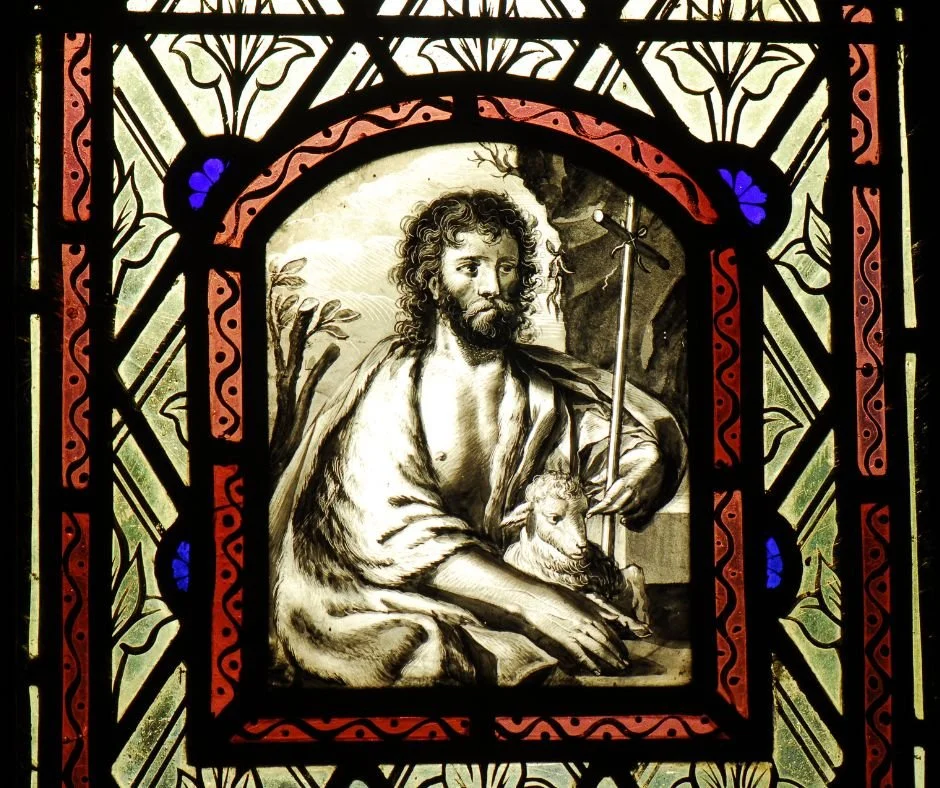
In John 1:36, the disciples of John the Baptist hear him say, “Look, there is the Lamb of God.” The Lamb of God is a metaphor for the one anointed with the Spirit—the Messiah. John describes Jesus as the one in whom the Spirit abides. These disciples then ask Jesus, “Where are you staying?” and Jesus answers, “Come and see.” Andrew stays, or “abides,” with Jesus. He experiences the awakening Merton describes when meeting Christ. Jesus asks him, “What do you want?” Andrew does not know, but he knows he wants to be as close as possible to the God he sees in Christ; he wants to abide in God. The great gift is presence. 

“Abide” is dense with meaning. God abides with God, showing a dynamism where the persons of the Trinity co-inhere. The energy of love within God flows out as the Word abides with humanity (John 1:14). Jesus becomes the example of full humanity: as He abides in the Father and the Father in Him (John 14:11), so too do we abide in Jesus as branches rest in the vine (John 15:5). 

Our spiritual practice is where we learn to abide. Holistic spiritual practice usually has two aspects: alone in solitude and in community. 

·      To your own self, be true.

·      Spiritual practice is anything that helps you forget yourself.

·      It requires courage, faith, and risk.

·      In practice, we forget ourselves on purpose.

·      We focus on love

·      At times, we will feel the love of God pouring into us in abundance. 

And yet, as Merton reminds us, it does not matter very much if we falter. No despair of ours can alter the reality of things. We remain in the joy of the cosmic dance, which is always there. Indeed, we are in its midst, and it is in ours, beating in our very blood, whether we want it to or not.

This is the beauty of Merton and the mystics: Do we put our faith in our ability to abide, or in the love that abides in us despite our inability? In our inability to abide, love remains, precious in our confusion and in our wayward ways. 

Abiding with God we also learn to abide in each other, allowing the Christ in us to love the Christ that is in the people we share community with. As we abide in Jesus, each of us becomes the place where heaven and earth meet. Each of us is a living, breathing word of the Lord, a vision of God made manifest. It is not the perfection of our lives that makes us this place; it is our openness, our willingness to love, our acceptance of the pain of vulnerability, and our gentleness with ourselves and our mistakes that allow God to abide in us and flow through us into the world.

Desiree Snyman
Epiphany

Sermon Notes for Sunday 11th January

by Desiree Snyman

This year the season of epiphany is reminding me that small things, done with great love, matter to God and transform the cosmos. 

The following poem is by Jan Richardson:

Wise women also came.
The fire burned in their wombs long before
they saw
the flaming star in the sky.

They walked in shadows, trusting the path
would open under the light of the moon.

Wise women also came,
seeking no directions,
no permission from any king.

They came by their own authority,
their own desire,
their own longing.

They came in quiet, spreading no rumours,
sparking no fears to lead to innocents’ slaughter,
to their sister Rachel’s inconsolable lamentations.

Wise women also came,
and they brought useful gifts:
water for labour’s washing,
fire for warm illumination,
a blanket for swaddling.

Wise women also came,
at least three of them,
holding Mary in the labour,
crying out with her in the birth pangs,
breathing ancient blessings into her ear.

Wise women also came,
and they went,
as wise women always do,
home a different way.

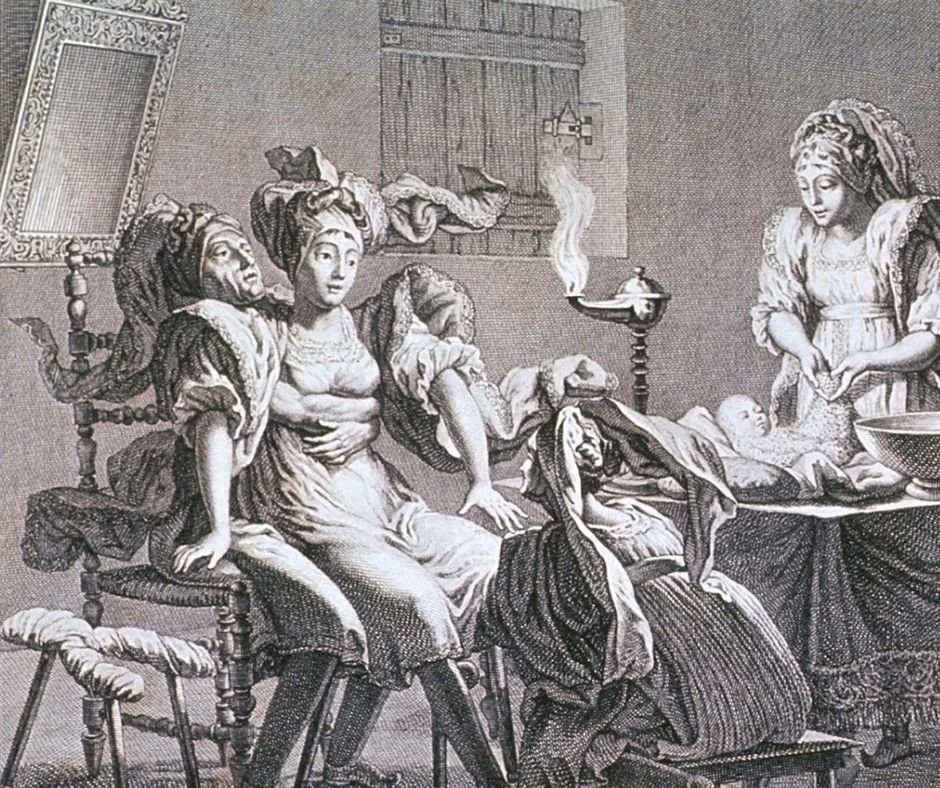
There is no biblical record of midwives assisting at the birth of Jesus. Nor is there a Biblical record for three kings, camels, donkeys, a stable or a cow yet our traditions are happy to accept their presence at the nativity. (St Francis was the first to pageant a creche scene which he did to emphasise that God is with us in creation). Could we stretch out imaginations to accept the possibility that wise women may have assisted at the birth of Mary’s child? After all, Mary was young, possibly 14, 15 or 16 years old and this was her first pregnancy. Sure, there is no evidence for the presence of wise women midwives, whose contribution may have been so obvious or insignificant that it was overlooked. Yet, small things, like supporting a woman in labour, done with great love, matter to God and transform the world. How many other small things done with great love are happening right now, transforming our world, yet we may have no record of them? Yet small actions done with great love matter to God. 

Today’s address is “Epiphany and Empire”. Both words are explained. Epiphany means divine manifestation. From January 6 churches celebrate the end of the 13 days of Christmas and the beginning of the season of epiphany, the giving of light in the darkness, enlightenment, the manifestation of God’s glory, the gift of divine revelation in Christ. The Old Testament lesson stirs our hope: “Arise, shine; for your light has come, and the glory of the Lord has risen upon you. For darkness shall cover the earth, and thick darkness the peoples; but the Lord will arise upon you, and his glory will appear.” The promise of epiphany’s hope will sound irrelevant unless it inhabits real world politics. We might spend a Sunday hour reading “Arise Shine” and singing hymns about light but at some point, we will go home, switch on the news, and confront a world at war, indifferent to the type of justice Jesus imagined. Take heart, the Good News of Christmas and Epiphany was and is born in the shadow of empire, reminding us that seemingly insignificant people, and seemingly insignificant actions like changing direction, matter to God and transform the world. 

I use the word empire as a general description for the oppressive and massive control power seeks to extend geographically, politically, economically, intellectually, emotionally, psychologically, spiritually, culturally, and religiously. In the past empire referred to nation states such as the empires of Babylon, Rome or England but empire could also refer to the wide-reaching control technocrats and oligarchs seek to impose on society. The effects of empire are long lasting. Even after empire has fallen, been defeated or retreated, empire’s impact still wounds, just ask post-Colonial Africa, and First Nations Australians. While Australians might enjoy relative peace in a relatively stable democracy, we are not immune from the sting and influence of empires and the brutality of the rulers that control them. 

What media today has in common with the historical records of antiquity is that the focus is almost exclusively on powerful and famous personalities who succeed within empire. That is how we know about Herod. While the writing of classical history might salute the architectural mark Herod left on history, theology and scripture point out that Herod’s grandiose constructions were paid for by taxing the poor. Theology and Scripture recognise that Herod ran an empire within an empire. Herod’s Jerusalem was like a police-state, complete with loyalty oaths, surveillance, informers, secret police, imprisonment, torture and brutal retaliation against any serious dissenter.

There are places in the world that echo the empire of Herod and of Rome. In the face of big politics, and significant challenges, it is easy to feel helpless; what can any one person do to change the injustice and pain caused by empire and inhumane systems?

The nativity stories centre on ordinary, easily overlooked people, Jewish refugees, through whom God changes the world. When the visitors from the East have offered their gifts, they return home by another road. A small decision to change direction becomes an act that saves lives. Against the crushing force of empire stands the quiet, liberating power of human presence and moral courage. Are our own choices, made in a time of violence and domination, really of any less weight, even when we feel small? So, the Messiah continues to enter history quietly, like a thief in the night, not through spectacle or force, but through moments of faithful, hidden grace (1 Thess 5:2).

Little things done with great love matter to God and transform the world. Epiphany invites us to remember the quiet stories of resistance, carried by people of conscience who acted without knowing how their choices would turn out. May these stories steady us and give us courage in our own time, when empires still loom large and the need for faithful, loving, and brave small acts has never been greater.

Desiree Snyman
God is with us

Sermon Notes for Sunday 4th January John 1:10-18 Christmas 2 by Geoff Vidal

We have had a wonderfully busy family Christmas. The presence of a niece from Brazil and a niece from California gave us an excuse for more gatherings with lots of eating and drinking. I very easily fell into the trap of making Christmas more about family celebration than connecting with God. The strong attraction of the Aussie Christmas culture prevailed! Why do they celebrate Christmas in Tokyo? Often it seems that Santa Claus is more important than Jesus. Now, hot cross buns in Coles are already beginning to distract us from Easter and, for many people, chocolate bunnies will be more important than the crucifixion of Jesus. 

Over Christmas, in those times when I have actually tried to connect with God, my thoughts have been about how the baby Jesus can distract us from the teaching, healing, loving Lord Jesus. We will end today by singing “Away in a manger” but I hope we see more than the birth of a baby. The critical Christmas message is that “God is with us” Emanuel! Christmas is all about seeing the glory of God. 

Our Gospel reading this morning was the continuation of the wonderful poetic opening of the Good News according to John. John begins his Gospel dramatically; “In the beginning was the Word and the Word was with God and the Word was God  .... everything came into being through him .... the light shines in the darkness and the darkness did not overcome it”. 

That powerful message from the prologue to John continued in today’s reading. Verse 14 says “And the Word became flesh and lived among us, and we have seen his glory, the glory as of a father’s only son, full of grace and truth”    

This Tuesday it is Epiphany. The 12 days of Christmas are done and dusted on 6th January and that’s the day for decorations to come down. Traditionally, Epiphany is the day of reading about (and celebrating) the visit of the wise men. Their story is a great story about seeing the glory of God. 

In our house, the wooden nativity scene with the manger is put away on 6th January but the carved wooden figures of the wise men are now brought out and, for the rest of the year, they stay at our front door reminding visitors to our house that the wise people are still looking for God. 

I recently read a sad story of the Archbishop of York, Stephen Cottrell, who said he was 'intimidated' by Israeli militias during a visit to the Holy Land. Archbishop Cottrell explained that he was stopped at checkpoints and that militias told him he could not visit Palestinian families in the West Bank as he had planned to do. During his Christmas Day sermon at the Cathedral in York, he said: “We have become fearful of each other, and especially fearful of strangers. We don't seem to be able to see ourselves in them and, therefore, we spurn our common humanity.” 

Archbishop Cottrell described how YMCA charity representatives in Bethlehem, who work with “persecuted Palestinian communities” in the West Bank, gave him an olive wood nativity scene carving.

The piece showed a “large grey wall” blocking the three kings from getting to the stable to see Mary, Joseph and Jesus. He said, “It was sobering for me to see this wall for real on my visit to the Holy Land, and we were stopped at various checkpoints and intimidated by Israeli militias who told us that we couldn't visit Palestinian families.” 

So, if they tried it today, any wise men who came from the East, from some country far away, would be blocked from visiting Bethlehem.   

You and I live in an age of seeking understanding, of longing for peace, where life can be thought of as a search, a journey. People are looking, searching. Visitors who turn up to Christmas services and who sometimes sneak into the back of our churches on other Sundays are “seeking”. They are trying to find out what Christianity is really all about; wondering if it is possible to see the glory of God.

 This is an age of searching. In fact, we are often suspicious of people who say that they are sure of where they are. We have our doubts about anyone who is confident in their destination. We are more comfortable with people who say, “I haven’t arrived yet, I am still searching” than we are with people who say “I know! I have definitely found what I am looking for.”  

So, Epiphany is the day for the seekers and the searchers; the day when wise people are on their journey, looking for the Messiah, the promised one. Epiphany is the day for looking for the presence of God with us. 

And, in the Epiphany story, these people, who came to the manger in Bethlehem, were not necessarily kings and, although they had three presents, there were not necessarily three of them. But, they were wise and, significantly, they knew that they didn’t know everything. Most certainly, they were all people on a journey. 

These wise men were strange and foreign. We guess that they must have come from Persia. That is modern- day Iran. They were not Jews: not people of the book. They were aliens. And yet they were the first ones to see the glory of God in Jesus. They were the first ones to worship him.  

They are the ones who, lacking a certainty about where the Messiah is to be born and about who he is, lacking the scriptures themselves, are on a search. Others may be content to stay home, going over the old slogans and formulae, keeping to well-worn paths, but wise men are prepared to get up and go to a new place. 

I wonder what happened to the wise men after they left the manger at Bethlehem. Initially, they intended to go back to tell King Herod where they had found the baby. Fortunately, an angel appeared to them, took charge, and told them not to go back, because the king wanted to kill the baby Jesus. All we are told is that they went home “another way.” Isn’t “another way” a wonderful little phrase! Wouldn’t it be interesting to hear the story of the rest of the lives of these wise men after they chose to go “another way”?   

Undoubtedly these wise men, these searchers and seekers, who had found the baby Jesus as the long-awaited Messiah and worshipped him - these people who had seen the glory of God - would not have gone home the same way, even if the angel had not warned them. That is, there was no way to go back home to their previous lives. They had seen God Incarnate: they had seen the fulfilment of their expectation, and they were compelled to go back “another way”, forced to live lives other than they would have lived had they not met the babe.

Desiree Snyman
Christmastide

Sermon Notes for Sunday 28th December Christmas 1
by Doug Bannerman

The child in me still wants the Christmas season to be a sugar-coated experience of happiness, safety, warmth and good will. I spent the war years in Vancouver, and my memories of Christmastide are coloured by images of lots of snow outside, checking to make sure that the reindeer had found the carrots left on the window sill (we did not have a chimney), singing carols en famille after breakfast and, finally, opening presents. 

Although today’s gospel reading does have a bit of sugar, it is laced with a sobering view of life and the universe.  

Matthew’s story is quite a paradox, celebrating the birth of Jesus, our redeemer, in the context of Herod’s slaughter of the Holy Innocents. By setting Joseph’s dreams in the presence of “Rachel weeping for her children”, Matthew locates the announcement of God-with-us in a believable universe because it matches our own. 

The holy family are refugees and refugees still flee from the horrors of their homelands. Powerful people still threaten the vulnerable, and death continues to stalk the corridors of society. 

Nevertheless, Matthew tells us that in the madness of want and evil, God comes to give life, to preserve the life that is God’s unceasing action of creation. What overpowers the bloody spectacles that humans create, however, is the overwhelming truth that God not only gives a means for responding to evil, but also a reason – that is to say, God’s creation is holy, intended for good. That intention makes all the difference. 

Matthew also makes time for Joseph. He is given four crucial dreams in the first two chapters. His role is not only to protect Mary and Jesus but to serve as one whose actions respond to God’s desire for Joseph’s little family’s safety. God speaks; Joseph listens and acts. 

We cannot avoid noticing, however, that the other parents of the children targeted by Herod do not receive an angel’s message. This, again, reflects a reality of our world, and of course, it is a circumstance worthy of our prayer and mourning. But we do not understand it. That must be said. Not everyone is saved from others’ evil deeds. 

Christians do not worship a God who simply fixes problems. We worship the God who knows anguish, misery, agony and torment; we worship a God who comforts those who suffer and who visits us with dreams, visions and insights as with Joseph. 

Joseph’s first dream (Matthew 1) tells him not to abandon Mary. In the second, (Matthew 2:13-14) an angel tells Joseph to take Mary and Jesus to Egypt or Herod will kill the baby. Third, an angel tells Joseph, the refugee in a strange land, that because Herod is dead, the family can safely return to Israel (Matthew 2:19-20). On the way, however, Joseph learns that Herod’s son — someone as brutal as his father — is the new ruler. He hesitates until a fourth dream assures him it is safe to bring his family to a new home in Nazareth of Galilee (Matthew 2:22). 

Today we heard only one of Joseph’s dreams, but it embodies the thrust of all the dreams that came to him: Do not fear anything. Consider the lilies of the field, and so on. Well … easier said than done. Not being a lily in the field, I fear a number of things. Besides, fear is a normal human response, a protective device. 

Nevertheless, God does speak to us, if we pay attention – in inklings, love, inspiration, insight, empathy, visons, dreams, intuitions, and … well, everything really. 

Joseph understood where he ought to stand: alongside those who are in trouble. He guarded and nurtured the ones in need of being lifted up, his children, his son Jesus. 

The contemporary American prophet Linda Wylie-Kellerman recently remarked “Awe and wonder are the gifts my kids give me daily. But also, I believe it is a gift we adults need to give to the children in our lives.”  

She points to the context of anxiety within which our children are growing up. It is, in fact, an incredibly anxious time. A host of destructive elements threaten our existence and that of the precious planet that provides us with the wherewithal to live, to breath, to grow in health and safety. The future is unpredictable. And our children’s lives are turned upside down at every turn.  

Children are resilient to be sure, but this is too much, and they are growing up feeling anxious, worried, stressed and angry. Most of the kids I know are all too aware that the powers that be in this world simply do not care.  

One powerful antidote to anxiety stares us in the face every morning at dawn and every evening at sundown – the ineffable grace of awe and wonder.  

It is our responsibility to make opportunities for our children to experience this grace, to find beauty in unexpected places, to marvel at the miracles around us, and to rest in moments of pure magic. 

Again to quote the prophet: 

“Beloved friends, go out and find a secret portal. Walk the shoreline and keep your eye out for magic. Pull out that old telescope. Tell wild stories. Go outside and dance in the rain. Be “that” adult who gets the eyeroll and the side smile. Laugh often. Slow down. Feed the imagination. Clear the space to be washed over by this wild and wonderful world.” 

Thus do the angels bear messages of hope and love from God to all of us; setting the tasks of life before us.  

Rilke framed it rather nicely:, 

For gazing, you see, has its limits.

And the more gazed-upon world

wants to prosper in love.

Work of the eyes is done,

begin heart-work now

on those images in you, those captive ones;

for you conquered them: but you still don’t know them


Doug Bannerman

Desiree Snyman
Spiritual Virgins

Sermon Notes for Sunday 21st December on Matthew 1:18-25 by Desiree Snyman

Genealogies

Luckily for us, the lectionary reading begins at verse 18 of Matthew 1. Verses 1–17 detail the genealogy of Jesus with unpronounceable names. Raise your hands when you recognise a name from Matthew 1.1-17: Abraham was the father of Isaac, and Isaac the father of Jacob, and Jacob the father of Judah and his brothers; and Judah the father of Perez and Zerah by Tamar; and Perez the father of Hezron; and Hezron the father of Aram; and Aram the father of Aminadab; and Aminadab the father of Nahshon; and Nahshon the father of Salmon; and Salmon the father of Boaz by Rahab; and Boaz the father of Obed by Ruth; and Obed the father of Jesse; and Jesse the father of King David. 

In Matthew 1.1-17 three sets of fourteen generations are listed. The number fourteen is not accidental. In Hebrew, David is indicated by three letters, DWD: Daleth (4), Waw (6), Daleth (4). Thus 4 + 6 + 4 = 14. Matthew is signalling, symbolically, that this story culminates in the promise associated with David, though not in the way anyone expects. 

Controversially, five women are named, four of them outsiders or boundary-crossers. All five live in tension with Jewish law, and their relationships intensify that tension. Tamar, Rahab, Ruth, Uriah’s wife, and finally Mary. Within the strict logic of the law, each story carries the possibility of condemnation. Yet it is through these women that the Messiah comes.

Already, Matthew is unsettling any neat account of righteousness. 

Joseph and righteousness

Joseph is described as a righteous man, yet the irony is that his righteousness looks like mercy. Mary is with child. Joseph is afraid. There are laws, reputations, and honour to consider. Rather than exposing Mary to public disgrace, he plans to divorce her quietly. Then a dream interrupts him, and he chooses differently. He takes Mary as his wife.

This is not a story about moral certainty. It is a story about surrender. 

What Matthew is doing

The genealogy is not historically precise. This is not a DNA report from Ancestry.com. It is a theological text, carefully composed to tell us how God works.

Some examples help us see this:

1.   Seventeen verses list Joseph’s lineage in the active voice: Abraham begat Isaac, Isaac begat Jacob, and so on. Then suddenly, the pattern breaks. The active voice is replaced with a passive voice: Jesus was begotten Jesus is not begotten by the Holy Spirit. Matthew is not explaining biology. He is announcing meaning. This child belongs wholly to God’s purpose, not to human power, bloodlines, or imperial authority. In a world ordered by Roman domination and violent hierarchy, Matthew dares to claim a different source of life altogether.

Some will read the virgin birth literally. Others will read it as poetry and symbol. Matthew allows space for both. But neither should miss 1.   the central proclamation: something new is happening. There is a rupture with the old order. That is where the good news lies. 

It is to this virgin birth that we now turn, because it is not only about Mary. It is an invitation to us. 

Virgin births

Meister Eckhart says it best (in Sermon One, in Walshe, Complete Mystical Works):

“Here, in time, we are celebrating the eternal birth which God the Father bore and bears unceasingly in eternity, because this same birth is now born in time, in human nature. What does it avail me that this birth is happening, if it does not happen in me? That it should happen in me is what matters.”

Where does this birth take place? Not in Bethlehem. Not in a stable. Not around 4 BCE. Not even only in Mary. But “in the very purest, loftiest, subtlest part that the soul is capable of”, the part of us that is virgin. Virgin, here, does not mean untouched or innocent. It means open. Unclaimed. Not possessed by fear or control. 

The ground of the soul

I imagine our lives and identities are like a river. When the river is clogged with debris, the bottom is hidden. But when the water clears, the ground becomes visible. That ground is always there. So, it is with us. Beneath the false selves, the wounds, the anxiety, and the stories we tell ourselves, there is a deeper ground. Eckhart calls it the ground of the soul. It is where God and the soul are one. It is where the Christ is eternally being born. Emmanuel. God with us. 

Our lives may feel muddied by fear, grief, or self-protection. Yet our true identity is not the turbulence at the surface. It is the divine life rising quietly within us. To live as a spiritual virgin is to live open to God, not striving for purity, but practising availability. Spiritual virginity is about letting go of the illusion that we are self-made, self-secured, and self-contained. 

The rim of eternity

Eckhart says that when we live from fear and separation, we cling to a false self, a self that believes it must manage everything. That fear, he says, is our deep confusion. Mary and Joseph step out of that confusion. They do not grasp. They do not defend. They consent. They live, as Eckhart says, on the rim of eternity. Still ordinary, still in the mess of daily life. yet open to the divine life already holding them. Joseph’s righteousness is not rule-keeping, it is release. He lets go of his need to control the future. He allows God to act in a way he does not fully understand. That is the real miracle of this story.  

Christmas now

Christmas is not about God arriving from somewhere else. It is about the ground of love becoming visible in human life, God with us, Emmanuel. Eckhart would say God is not only with us, but shining through us, when we dare to trust, to release control, to love without guarantees. We do not celebrate a miracle that happened once. We celebrate a mystery that can happen now. In us. In this world. Whenever fear loosens its grip and love is allowed to be born. 

Matthew’s story unfolds against a background of terror, violence, and threat. That world is not so different from our own. Fear and hatred may fill the air around us, but they do not have the power to name who we are. Only God’s infinite love, given in the depths of our soul, has the power to name who we are. Whenever we dare to trust, to release control, to live open to love without guarantees, Christ is born again. 

  • What are the things in your life that make you feel pressured, anxious, or like you have to be in control, and what might it mean to let God meet you right there?

  • What gets in the way of you being your real self, with God and with others, and what helps you feel more open, honest, and alive?

  • If something new and good could be growing in you right now, what do you hope it might be, and what small step could you take to make space for it?

Desiree Snyman
John the Baptist

Sermon Notes for Sunday 14th December on Matthew 11:2-11 Advent 3a by Desiree Snyman

I find the story of John the Baptist profoundly archetypal. It is, I think, the true story of many people’s faith journeys. I began preaching when I was eighteen. When I look back at some of those early sermons, which I have thankfully destroyed, I cringe. The faith of that eighteen-year-old has died, and it needed to. That faith could never have sustained me through the realities of life, through loss, grief, complexity, and the long arc of human vulnerability that any ordinary life brings. 

Whether I am visiting people in aged care, sitting with those who have attended one funeral too many, or standing beside hospital beds, I recognise this story again and again. John the Baptist, imprisoned by darkness, confined by doubt, remembering a faith that once burned far brighter before loss and suffering began to close in around him. What once felt like conviction now feels fragile. What once felt clear now feels distant. This is a deeply human experience. And the human instinct is to try to escape the darkness. We want God to break us out, to restore the light we once knew, to return us to something familiar. 

Yet the mystery of Christmas, prepared for through Advent, teaches us something far more unsettling and far more hopeful. The darkness is not a prison we must escape. It is the womb of God’s own darkness, the place where a deeper radiance is conceived and brought to birth. 

This is why I see John the Baptist as an archetypal faith journey for those of us who have followed Christ for many years. The faith of our younger selves had to die. We had to enter the womb of God’s darkness so that a greater faith, a more spacious faith, could be born. 

I have written a meditation from John’s perspective as he sits in that space of loss. It traces the grief of losing one faith while waiting, often painfully, for the rebirth of something deeper and truer. 

The Gospel is cheeky here, and deeply honest. When John questions Jesus, Jesus replies, “Go and tell John what you see: the blind receive their sight, the lame walk, the poor have good news preached to them.” This draws on Isaiah 35 and Isaiah 61. But notice what Jesus leaves out. Isaiah also proclaims freedom for captives. John is in prison after all. Surely that is the line you would include. But the prison John inhabits is not something he is meant to escape. It is the womb in which his faith is being transformed. So rather than rushing to free John, Jesus invites him to wait. To gestate. To trust that God is still at work, not despite the darkness, but within it. 

So let us sit with John for a while: 

He sits in Herod’s prison with nothing but time. Time to think, and time to pray. 

His mind drifts back to the early days, the good days, when he was fearless. His voice had carried conviction like fire. He can still hear himself by the Jordan, crying out: 

“Even now the axe is lying at the root of the trees. Every tree that does not bear good fruit is cut down and thrown into the fire. I baptise you with water for repentance, but one who is more powerful than I is coming after me. He will clear his threshing floor. He will gather his wheat into the granary, but the chaff he will burn with unquenchable fire.” 

John looks down at his camel-hair cloak. It has been a long time since he has washed. He longs for the Jordan. He longs to be submerged again, to be rinsed clean of politics and pressure, of worry and weariness, washed free of Herod. 

He remembers the day Jesus came to be baptised. John had been preaching about a new kingdom, the reign of God, a world where Pharaoh-like rulers do not have the final word, where taxes do not steal daily bread, where there is enough for all. And then, suddenly, the kingdom was standing in front of him in human flesh. Jesus. The Lamb of God. The One. 

And surely now, John thought, the reckoning would come. The Pharisees and Sadducees, the tax collectors and soldiers, the whole machinery of exploitation and hypocrisy would meet the axe. The new day would dawn. 

Except it has not happened. 

John sits in prison and the promised day of judgement has not come. His prayers for a better tomorrow seem unanswered. Fire has not fallen on those who have stolen bread, clothing, and life from his people. 

Instead, the Messiah has done something else entirely. 

He has called tax collectors as disciples. He has spoken kindly to soldiers. He has eaten in Pharisees’ homes and preached in their synagogues. Instead of curses, there are beatitudes. Instead of a cleansing fire, there is “love your enemies.” 

And in the silence of prison, John begins to wonder if he was wrong. Misgivings rise. He begins to think that perhaps Jeshua ben Josef is not the One after all. 

At last, he sends his disciples with the question he can no longer keep contained: “Are you the one who is to come, or should we wait for another?” 

The answer that comes back lights up the prophets he has known by heart: “The blind receives their sight. The lame walk. Those with leprosy are cleansed. The deaf hear. The dead are raised. The poor have good news preached to them.” 

And then the final line, unexpected, almost sharp in its gentleness:

“Blessed is anyone who does not take offence at me.”

What can this mean? 

John realises at once that it sounds like an additional beatitude, a mark of those who truly belong to the kingdom. A call to patience with the love of God and the way of God. A call to trust that God’s mercy is not weakness, and God’s timing is not absence. 

And as he waits in prison, John learns again what he wanted others to learn. The covenant does not allow you to manufacture God. You can only be surprised by God, even unsettled by God, even carried beyond what you expected. 

The God he expects and the God who comes are not always the same.

So, he mutters the words of his favourite prophet, not as a slogan now, but as a lifeline: 

“Strengthen the weak hands and make firm the feeble knees. Say to those who are of a fearful heart, be strong, do not fear. Here is your God.”

Slowly, very slowly, peace settles upon him like a dove. And he knows, whatever happens next, God is still God. And it will be well.

Desiree Snyman
Goodness is stronger than hate

Sermon Notes for Sunday 7th December
on Matthew 3:1-12 by Desiree Snyman

Goodness is stronger than evil.
Love is stronger than hate.
Light is stronger than darkness.
Life is stronger than death.
Victory is ours through Him who loves us. 

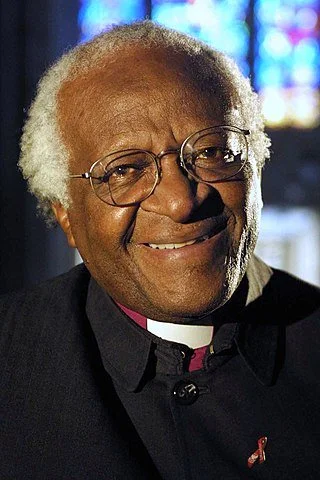
The prayer was written by Desmond Tutu. Although first published by Double Day in 1995 in “An African Prayer Book”, the prayer surely predates its published form. Prayer, meditation and the reading of Scripture were a daily diet for Desmond Tutu. The prayer was sustenance and hope during the dark days of oppression. Imagine it. The apartheid regime oppresses black people. In response resistance movements rise up merely asking to be recognised as humans. The brutal and violent response of the apartheid regime to resistance movements leaves many protesters including children dead, others in prison and still others in exile. The wave of racial oppression must have felt never ending. In the midst of the doom Tutu experiences this prayer: Goodness is stronger than evil. 

A similar version to this prayer is found in the papers of Dieterich Bonhoeffer, penned whilst in a Nazi concentration camp. Glancing at the German victory during World War Two, observing the holocaust, witnessing suffering, Bonhoeffers firm was hope and belief was that ultimately God’s goodness is stronger than evil.  

What Dietrich Bonhoeffer and Desmond Tutu with John the Baptist have in common is a stance of hope when the hopelessness seems never ending. The Roman political and military might was epic, indefatigable and unbeatable. In the midst of Roman oppression, in a wilderness place, John the Baptist calls for hope. Scholarship today confirms that John the Baptist was a member of the Essene community. The Essenes, who lived near Qumran around the Dead Sea, had an ascetic approach to life and repudiated the decadence of the world they saw around them. Much of this Essene lifestyle is reflected in John the Baptist, who, like prophets Elijah and Elisha before him, lived in the desert wearing camel skin and eating locusts and honey when he could find them. Enormously admired in his day, John gave voice to the people’s anger at the elites who profited from religious and political hierarchies. More than anything, John wanted God’s kingdom to come on earth as it is in heaven. The dreams described in Isaiah’s poetry inspired John, a land of safety with enough for all, a land where people’s full flourishing was nurtured and where there were no stumbling blocks to people’s needs being satisfied. In the face of the reality of Roman oppression, John’s sermons must have sounded absurd.  

As we engage in this our third week on gender-based violence it is to this theme of hope that I wish to turn. The statistics spell doom. Too often the church has been complicit in violence against women especially in the area of false doctrine such as male headship and female subservience. Despite greater awareness and funding for gender-based violence, we haven’t turned the tide. The Nordic paradox is a term that researchers use to describe the situation in Scandinavian countries like Iceland that have the most progressive and equitable societies violence against women is alarmingly high. Iceland, Finland and Sweden have the highest gender equality rankings.  

We desperately yearn for God’s kingdom of peace, hope, justice, kindness, and gentleness. We take communion trusting in a universe where all have enough bread, and all have wine to celebrate. We pray. We worship. Our hearts long for all children to experience safety, love, and hope. Yet the world around us belies our deepest confidences. The political systems of injustice and racism effect the most vulnerable. Aboriginal people still have no voice, no justice, no acknowledgement of the history of pain embedded in their DNA. The war in Ukraine rages against our dreams of peace. We feel frustration like John, Dietrich and Tutu did, Jesus’ revolution of love does not seem to be happening. What can break us free from our prisons of doubt, discouragement, and apathy?  

Two things: 

Advent asks for waiting and hope and to see with spiritual eyes. Advent turns to several images or metaphors to describe how reasonable this hope is. Advent is described as a pregnant season; we are a pregnant people nourishing the divine within that will birth into the world. The only conviction that pregnant woman can have is hope; you can’t see the baby, but you have the firm hope that a child will be born in 9 months. The image of a seed growing in the ground.  

1. Jesus says that God’s kingdom is on the way and is unfolding in our midst. It is true that we live inside the tension of the yet and the not yet. There is a tug of war with God’s kingdom and Isaiah’s dream on the one hand and the reality of war, violence, and injustice on the other hand. Jesus asks that we notice and bless the moments where the kingdom of God blossoms. 


2. We are invited to look at the seeds of the kingdom of God growing, and not focus on the dark, dank soil, compost and manure surrounding the growing seed. Live the future now 2. “Strengthen the weak hands,” says the Prophet “And make firm the feeble knees. Say to those who are of a fearful heart, ‘Be strong, do not fear!’” The prophet Isaiah who inspired John the Baptist and Jesus paints a vivid picture of God’s new world order. The vision of God’s kingdom on earth as it is in heaven is to inspire people to live God’s promised future as if it is a reality now. Thus, in God’s promised future, there is no loneliness thus we celebrate belonging and community now. In God’s promised future there is no hunger and poverty thus in the present we share our excess so that all have enough. In God’s promised future people have access to education and all that might nourish their full potential thus in the present we support policies that remove blockages to people’s agency and empowerment. To describe how blockages to human growth is removed Isaiah uses the image of a highway, a straight road where mountains are made low, and valleys are lifted up. “And the ransomed of the Lord shall return and come to Zion with singing; everlasting joy shall be upon their heads; they shall obtain joy and gladness, and sorrow and sighing shall flee away.” 

“Do your little bit of good where you are; it’s those little bits of good put together that overwhelm the world. ”Desmond Tutu.

Desiree Snyman
“Waking Up”

Waking up

Sermon Notes for Sunday 30th November on Matthew 24:36-44

by Desiree Snyman 

Gender based violence GBV

We support the 16 days of activism to end gender-based violence (GBV) including domestic violence and intimate partner violence. While physical violence is the most obvious form of domestic violence there are several types of GBV including:

Intimidation: Using fear to control a victim survivor by forcing changes in their behaviour. This can involve yelling, threatening gestures, destroying property, displaying weapons, reckless driving with the victim in the car, stalking, or making unwanted contact.

Verbal Abuse: Using words or tone to degrade, insult, ridicule, or shame. This includes name-calling, derogatory comments about appearance, beliefs, spirituality, friendships, or achievements, and silencing the victim survivor.

Emotional Abuse: Behaviours that damage a person’s self-worth and emotional wellbeing. Examples include the silent treatment, minimising or denying the victim’s concerns, gaslighting, shaming, using jealousy as justification, guilt-tripping, or manipulating love and goodwill.

Isolation: Intentionally cutting a victim survivor off from their support networks. This may involve controlling where they go, who they see, their clothing or media, tracking money, limiting access to transport, or dictating when they should be home.

Financial Abuse: Restricting or controlling access to economic resources. This includes controlling family money, making all financial decisions, preventing employment, taking their money, or incurring debt without consent.

Minimising, Denying or Blaming: Refusing to take responsibility for abusive behaviour. This includes ridiculing concerns, downplaying harm, covering up abuse, rewriting events to protect the perpetrator’s image, or blaming the victim for the abuse or for the perpetrator’s substance or gambling issues.

Using Children: Using children as a tool of control. This can involve using children to send messages or threats, manipulating contact times, turning children against the victim survivor, blaming the victim to the children, or threatening to take them away.

Coercion and Threats: A pattern of controlling tactics designed to force compliance. Examples include threats of self-harm, blocking cultural or religious practices, threats about calling police or child protection, forcing the victim to drop charges, threatening loved ones, or coercing them into illegal activity. Coercive control became a criminal offence in NSW on 1 July 2024 when used against a current or former intimate partner.  

Coercive control is sometimes hard to define; it may be helpful to give explicit examples. Here are some of the stories from people who have survived GBV

(from https://shadowsofcontrol.com/articles/what-coercive-control-looks-like/

Constantly Changing the Rules: “Every time I started to feel in control of my life, he’d change the rules. It felt like I was always back at square one, questioning everything I did.” 

Discouraging My Independence: “He discouraged me from applying for jobs, claiming he didn’t want me working with other men. He even controlled my finances, even though I paid most of the bills.” 

Explosive Reactions: “I was nursing my baby on the couch when my partner got up and started screaming at me because I hadn’t cleared my cereal bowl from the table. He didn’t seem to understand that my baby was the priority at that moment, not tidying up.” 

Invasion of Privacy: “I wasn’t allowed to lock the bathroom door or take time to myself without him barging in, questioning why I needed privacy. If I ever locked the door, he’d make a big scene, saying it was strange or suspicious. He would even find tools to unlock it from the outside, claiming he had to use the bathroom, even though there were other toilets in the house. I wasn’t allowed any peace, and he always found a way to disrupt even my quiet moments.” 

Anger at violence

Stories about violence against vulnerable people provoke anger and sadness in me. Beneath the anger and sadness is a theological conviction that people are bearers of the Divine, created in the image of God, and worthy of utmost respect. When I look at another person, I want to remember that I am looking at a precious diamond formed in the image of God, holy and worthy of deep reverence. Abuse is the utter absence of respect. What I long for is respect, deep respect. How dare anyone harm a child or a vulnerable person. How dare anyone destroy the beauty of a human soul. 

And when I see even a trace of violence or harshness within myself, I am horrified. The line between good and evil does not run between people but within each of us. This is why I need God’s judgment. If we imagine God as judge and jailer, judgment becomes something to fear. But if we imagine God as healer, judgment becomes something we long for. When we struggle with an unknown illness, we long for a diagnosis. Diagnosis is judgment, and it is the beginning of healing. God’s judgment names what is broken so that restoration can begin. 

I have holy envy for the Hindu practice of bowing before another person, acknowledging the divine in them. Advent invites us to recover that same instinct of reverence and that embodied awareness of the sacredness of the other. It is the season in which we prepare to be ambushed by the beauty of God shining through every face; a bible study on Matthew 24 can help us realise this. 

Wake-up: Matt 24

This Gospel passage has often been read in a spirit of fear. Many have imagined a sudden vanishing or a divine interruption that sweeps some away and leaves others behind. But when we listen slowly, as Advent invites us to do, we discover something far more life giving. Jesus is not warning us about a violent divine ambush. He is calling us into wakefulness. The invitation is simple. Stay awake. Be ready. Keep alert. Wakefulness is not fear but awareness. It is the ability to see God in the present moment. It is the practice of noticing the divine in the ordinary. It is an inner awakening that recognises Christ in all things and all things in Christ. 

Jesus recalls the days of Noah, not because the people were particularly sinful, but because they were sleepwalking. They were eating, drinking, working, marrying, doing ordinary things, yet unaware of the deeper reality unfolding all around them. They did not perceive the divine invitation into a new way of seeing. They were physically awake yet spiritually drowsy. This is the condition Advent seeks to heal. Spiritual sleep is the dullness that forgets God is present. It is the heaviness that settles into routine and misses the sacred in the everyday. It is the fog that forgets that God is being born in every moment. 

Jesus calls us to wake up. Waking up is recognising that God is always already here. It is knowing that Christ is the light within the heart of matter. It is the inner shift where the mind of Christ begins to shape our way of being in the world. Two are in the field. Two women grind grain. They stand side by side doing the same work. One sees only the ordinary. The other perceives the presence of God. The difference is consciousness. 

To be ready for the coming of the Son of Man is not too fear a cosmic interruption. It is to awaken to the truth that the Son of Man, the fully human one, is being born within us now. Christ comes wherever there is compassion, justice, tenderness, courage, and presence. Christ comes whenever we recognise the sacredness of what is before us. The unexpected hour is every hour. The thief in the night is not an enemy but the Beloved who quietly removes whatever keeps us asleep. Christ comes not to frighten us but to awaken us to our identity as theotokia, God bearers. 

Advent invites us to stay awake. To awaken our senses. To notice the present moment. To choose consciousness. Christ consciousness is not something we achieve. It is something we awaken to. It is a gift already given, waiting to be welcomed. Waking up to Christ present at the heart of matter is ultimately acknowledging with reverence the divine within each person which means that respect is our default way of relating to others.  

Respect

The final word will be from Greg Ezzy, staff chaplain at EAC. For those who have lived in loving and respectful families, it can be difficult to imagine the fear, sadness, shame, and hostility that many experience in domestic violence situations. Greg says that “We Australians pride ourselves on mateship and fairness. Yet alongside our highest ideals there is a profound failure of respect. A woman dies every eight days in Australia at the hands of a partner or former partner. Twenty-five more are in intensive care. Countless others live in fear. One in four women and one in fourteen men experience physical, sexual, or emotional abuse from an intimate partner. These are not statistics. They are people created in the image of God. And still, respect shows itself daily in our multicultural democracy. It appears in our legal system, community service, and our commitment to reconciliation with First Nations peoples. But respect is not an idea. Respect is the quiet, daily act of listening. It is sharing responsibility, honouring autonomy, and creating safety. Respect is love in action, helping others flourish. 

This is the heart of Emmanuel. God with us. God in us. When we nurture this presence, respect becomes instinctive. When we see Christ in one another, reverence becomes our natural response. 

Alleluia for every person who chooses respect. Alleluia for those who interrupt violence and create safety. Alleluia for every home, workplace, community, and parish where dignity is honoured and the divine image is cherished.”  

Reflection Questions

1. Waking Up

  • Where in my life am I spiritually asleep or distracted?

  • What helps me become more aware of God in the present moment?

 2. Seeing the Divine in Others

  • Who do I struggle to see as carrying the image of God?

  • What daily practices might help me treat others with deeper reverence?

  • When was the last time I felt “ambushed by the divine beauty” in another person?

 3. Facing Violence and Its Impact

  • What forms of violence, disrespect, or injustice stir righteous anger in me?

  • How does naming my own shadows or harmful patterns open space for healing?

  • What does imagining God as healer, rather than judge, change in my understanding of divine judgment?

 4. Respect and Human Dignity

  • Where do I see respect flourishing in my relationships and community?

  • Where is respect failing, and how might I respond with courage and compassion?

  • How can I make safety, dignity, and kindness more visible in my home, parish, or workplace?

Desiree Snyman
Christ the King and Gender Based Violence

Sermon Notes for Sunday 23rd November on Luke 23:33-43 by Doug Bannerman


Christ the King


In 2020 Hannah Clarke and her three children died a violent death at the hands of her estranged husband. The coroner presiding at the inquest into their deaths found that it was unlikely anything more could have been done to prevent Rowan Baxter from killing his family. However, later evidence provided by whistle blowers from both the police system and the coronial system has cast doubt on that finding.


The Brisbane mother had made repeated disclosures of nonlethal strangulation, stalking, phone hacking, rape and suspected child abuse. She believed that Baxter was capable of killing her, himself and the children. None of these disclosures were logged in the police systems at the time and the coronial system failed to take proper note of the evidence presented.


When Baxter abducted his youngest daughter, he was very charming and persuasive with the two officers who went to his property. Astonishingly, the officers ended up giving him advice on how to thwart the restraining order Hannah Clarke had in place.


Baxter controlled, abused, stalked and killed his estranged wife and their children, having spent days planning the act. A hideous and extreme example of Gender Based Violence (GBV).


The failures of the police and coronial systems beggars belief and, in my opinion, those failures belie the influence of a flawed cultural script in both institutions. I believe that the same flawed script is a feature of Australian culture. A dominant facet of that script is a failure to listen to the woman. It takes extreme courage for a woman to say out loud what is happening behind closed doors.


Shockingly, in 2023 – 2024, one woman was killed by an intimate partner every 8 days on average.


A report in last Friday’s Guardian (21 November 2025) notes that “statistically, the most reliable way to predict a domestic violence homicide is to believe the victim”. LISTEN TO THE WOMAN.


Today is the start of a national 16 days of action against GBV. But we need to take a closer look at what it entails. At first sight we think of physical or sexual violence only; but GBV encompasses far more than that.


Although actual or threatened physical and sexual assaults are common forms of GBV, regular use of other abusive behaviours, when reinforced by one or more acts of physical violence, make up a broader system of abuse known as Coercive Control. Physical assaults may occur only once or very occasionally, but they instil threats of future attacks and allow the abuser to take control of the woman’s life and circumstances.


Here are the characteristics of coercive control.


Intimidation

Employs looks, actions and gestures that make her afraid. Smashes her things. Destroys her property. Abuses pets. Displays weapons.


Emotional Abuse

Puts her down. Makes her feel bad about herself. Calls her names. Makes her think she’s crazy. Plays mind games. Humiliates her. Makes her feel guilty.


Isolation

Controls what she does, who she sees and talks to, where she goes. Limits her outside involvement. Uses jealousy to justify actions.


Minimising, Denying and Blaming

Makes light of the abuse and does not take her concerns seriously. Says the abuse didn’t happen. Shifts responsibility for abusive behaviour. Says she caused it.


Using Children

Makes her feel guilty about the children. Uses the children to relay messages. Uses visitation to harass her. Threatens to take the children away


Economic Abuse

Prevents her from getting or keeping a job. Makes her ask for money. Takes her money. Does not her know about or have access to family income.


Male Privilege

Treats her like a servant. Makes all the big decisions. Acts like the “master of the castle”. Defines the roles of men and women in the relationship.


Coercion and Threats

Makes and/or carries out threats to do something that will hurt her. Threatens suicide. Threatens to report her to welfare. Makes her drop charges. Makes her do illegal things


That’s a brief outline of the dynamics.


In the population at large, something like 25% women experience GBV; but according to a report commissioned by the Anglican Church of Australia, 44% of churchgoing women experience GBV, often exacerbated by the perpetrator’s use of biblical references to justify his opinions and actions. The worst offenders were priests.


Why, then are we discussing this on the last Sunday of the church calendar, when we celebrate Christ the King?


Jesus never, ever, identified himself as a king, although he did say in his conversation with Pilate, “My kingdom is not of this world. If it were, my servants would fight to prevent my arrest by the Jewish leaders. But now my kingdom is from another place.” (John 18.36)


Earthly kings and emperors in Jesus’ time were Roman imperialists predominantly interested in money and power. Their subjects were subjugated, poor, dispossessed, and powerless to determine their own lives. In essence they were survivors of institutional violence.


But you may recall that, in the long history of ancient near East, the relationships between ruler and subject were represented as that between a good shepherd and his sheep. For example, the 6th king of the first dynasty of Babylon, King Hamurabi (1792-1750 BCE), described himself as “shepherd of men” and “supplier of pasture and water”, who has been appointed “to destroy the ruthless and the wicked and to prevent the weak from being robbed of his just rights by the strong.”


So, the ideal of kingship in 1750 BCE included the protection that the true shepherd gives to his flock, by leading the needy to pasture, providing food and drink, and establishing pasturages and places of safety.


However, a thousand odd years later in Ezekiel’s time (circa 600 BCE), that benign model of kingship had given way in Israel to an imperialist model that mercilessly exploited the poor and the weak. And the prophet Ezekiel declared: For thus says the Lord God: “I myself will search for my sheep and will seek them out” (Ezekiel 34:11).


Ezekiel regarded the office of shepherd to be a responsible vocation of caring not only for fit and healthy sheep, but also the weak, the sick, the injured, the strayed, and the lost.; and he was bent on calling the king and the ruling classes to account. Indeed, he called to account all who crushed the unpropertied and underprivileged classes.


It was six hundred years after Ezekiel when Jesus declared himself to be “the Good Shepherd”. The Kingship of Jesus the Christ is indeed not of this world, and is modelled on the likes of King Hammurabi, some 1750 years before his time.


I leave the last word on this subject to the prominent first century Jewish philosopher and theologian Philo (On Husbandry 50).


To be a shepherd is so good a thing as to be justly attributed not only to kings and wise men and perfectly purified souls, but even to God the ruler of all … For he speaks thus: “The Lord is my shepherd, and I shall lack nothing”. (Psalm 23.1) This psalm should be rehearsed by every lover of God, and in an especial sense by the universe. For like a flock, earth and water and air and fire and all plants and animals in them … are led according to right and law by God the Shepherd and King, who has set over them his true Logos and first-begotten Son, who takes over the care of this sacred Flock like the vice-regent of a great king. For it is said somewhere, “Behold, I am; I send my angel to thy face, to keep thee in the way”. (Exodus 23.20) So let the universe, the greatest and most perfect flock of the self-existent God, say “The Lord is my shepherd, and I shall lack nothing.”


Resources: In 1984, the Domestic Abuse Intervention Project (DAIP) in Duluth developed group workshops for men who batter and for their victims. Inter alia, the project published a way to describe such battering to victims, offenders, practitioners in the criminal justice system and the general public: the Duluth Wheel of Violence. Since then, many wheels of Violence and corresponding Non-Violence have been published for a variety of contexts. The description of coercive control above is adapted from the original Duluth model.

Doug Bannerman 2025

All Saints

Sermon Notes Sunday 2nd November

by Mark Stuckey

What springs to mind when you hear the words All Saints Day advertised?Is it someone who is a well-known saint? Is it one of the images depicted in our stain glass windows around the church?Is it someone known more personally to us, who has encouraged us by their faith. Today, on All Saints Day, we pause to remember those who have gone before us – those lives bore witness to the grace and power of God. Some were famous, like St Augustine or Mother Teresa. While others were quiet saints known more personally to us, parents, grandparents, neighbours, mentors. These peoples’ witness of faith have shaped our own faith story. All Saints Day is not about honouring the past; it’s about recognising the inheritance we share with them and the calling we now carry. Today, friends, our bible passages see us looking through two windows into the heart of God’s kingdom. One is Paul’s letter to the Ephesians – a soaring declaration of our identity in Christ. The other is Jesus’ teaching in Luke – a radical call to live out that identity in a broken world. Together, these passages answer two questions: Who are we in Christ? How should we live because of it? Let’s begin by deep diving into what the Apostle Paul says in Ephesians.

Part 1: You are Chosen and Empowered (Ephesians 1:11-23)

Paul begins with a bold claim. In verse 11 we read, “In Christ we have also obtained an inheritance, having been destined according to the purpose of him who accomplishes all things according to his counsel and will…” This verse tells us that you are not random. You are not forgotten. But in fact, you are chosen! We have an identity in Christ. To give some context about inheritance we need to return to the earlier verses of Ephesians chapter 1. In verse 4 it points out that God chose us before the foundation of the world to be holy and blameless before him in love. We were chosen!

As part of our identity in Christ, the Apostle Paul highlights that we are sealed by the Holy Spirit (v.13). What does it mean to be sealed with the Holy Spirit? In ancient times, a seal was a mark of ownership, authenticity, and protection. Kings sealed letters to prove they were genuine. Merchants sealed goods to show they belonged to someone. And God seals us with His Spirit. The Holy Spirit is God’s mark on your life. He’s the guarantee of your inheritance. He’s the presence of God dwelling in you. “He has put His seal on us and given us His Spirit in our hearts as a guarantee” (2 Corinthians 1:22) That means your salvation is secure. Your identity is sealed. You are not just saved – you are sealed.

This inheritance that we have been offered is not just to be used for future glory – it’s present identity that exists in each of us and that we can use as we go about the ministry we have been called to perform. The saints we remember today lived with this assurance as part of their identity. They new they belonged to God, and this radiated from them when they did their ministry tasks. The application for us is that we can be encouraged. Be encouraged that you, too, are part of this inheritance. You are sealed with the Spirit. You are not forgotten but rather loved. You are not alone. You are part of the communion of saints.

Eyes of the Heart

In his letter to the Ephesians Paul prays that the “eyes of your heart may be enlightened” (v.18). What does it mean by the eyes of your heart may be enlightened? Paul tells us that we can recognise the hope to which He has called you. We can recognise the riches of His glorious inheritance. We can recognise His incomparably great power for us who believe. This power, Paul says is the same power that raised Christ from the dead (v.20). That means resurrection power lives in you. Not just to survive – but to thrive. Not just to be saved – but to be sent. The saints we know lived with their eyes wide open to God’s work in

the world. In very individualised ways each of our saints demonstrated love in action, they did things with their hands, they visited the lonely and the sick, cared for people, listen to people, led people, prayed for people. But most of all they showed Christ’s love to people in a broken world. For each of them they saw beyond suffering, beyond injustice, beyond death.

Our application here is we can ask God to open our eyes and hearts. Allow us to see the world as the saints did – with hope, with courage, with love. As we go about our lives, our ministries, let our testimonies of faith display the power of Christ working with us.

Part 2: Living the Kingdom Way (Luke 6:20-31)

We have seen how Paul instructed the Ephesians about how to live a life pleasing to God. As we move into Luke’s Gospel, we see how Jesus instructs his disciples to live life. Life as the disciples know it is about to turn upside down. Jesus says to the disciples:

“Blessed are you who are poor…

Blessed are you who are hungry now…

Blessed are you who weep now…” (vv.20-21)

Here we see Jesus redefining blessing. The blessings are not offering as comfort, wealth or applause – but rather the blessings are as dependence, longing and humility.

Reversal of Values

As we move through the beatitudes in Luke’s Gospel a reversal of values becomes obvious to us with the woe statements. Jesus warns the rich, the full, the laughing, and the praised about their lifestyle. Why does Jesus offer this warning? Because the kingdom of God is not built on self-sufficiency. It’s built on surrender. This echoes Paul’s message. You were chosen not because you were strong, but because God is gracious. This is the kingdom the saints embraced. The Kingdom Way. They lived counterculturally. They chose humility over pride, sacrifice over comfort, mercy over vengeance. “Blessed are you who are poor in spirit, for your is the kingdom of God” (v.20).

For us what is the application? What does sainthood look like today? It looks like choosing the way of Jesus when the world chooses power. It looks like standing with the marginalised. It looks like living generously, even when it costs us.

Radical Love

Jesus doesn’t stop at the blessings and woes when instructing his disciples. Jesus continues and offers a most challenging command. He calls us to love our enemies, do good to those who hate you, bless those who curse you, and pray for those who abuse you (vv.27-28). This is resurrection power in action. This is what it looks like when the eyes of your heart are enlightened.You turn the other cheek (v.29)You give freely (v.30)You treat others as you want to be treated (v.31)

This is the heart of sainthood. This isn’t weakness – it’s kingdom strength. It’s the power to forgive, to bless, to love radically. The saints were not perfect, but they were transformed by love. They forgave when it was hard. They served when it was inconvenient. They loved when it made no sense.

For us what take away can we obtain when considering radical love. Consider radical love this way - Who is hard for you to love right now? And what would it look like to live as a saint in your workplace, your family, your community?

At the beginning of the sermon, I indicated that our bible passages today were like looking through two windows into the heart of God’s Kingdom. Our passages align with each other. In Ephesians it states you are chosen. In Luke, it says you are blessed even in poverty. In Ephesians it states you are empowered. In Luke, it says you are called to love radically. In Ephesians it states you have hope. In Luke, it says you live with kingdom values. In Ephesians it states you are sealed with the Spirit. In Luke, it says you reflect the Spirit through mercy.

Paul gives us the foundation. Jesus gives us the application.For us to be saints, be encouraged and know that you are chosen, sealed and empowered. Let that shape your decisions, your relationships, your worship. Be prepared to practice upside-down love – love the unlovable. Forgive the unforgivable. Bless the undeserving. That is kingdom living. Ask God to open your hearts to see His hope, His riches, and His power. And be the church that reflects Christ just as the saints who have gone before us have done. For the saints that we have loved they stood in awe of Jesus in their lives. We too as saints can stand in awe of Jesus and be guided by him. In a world of division, let us be a community of mercy. In a culture of revenge, let us be a people of grace.

Conclusion: You are the light.

Paul ends by saying that Christ is the head of the church, “which is his body, the fullness of him who fills everything in every way” (v.23)That’s you. That’s us!We are the fullness of Christ in the world. So, let’s live like it. Let’s love like it.Let’s be the people who know who we are – and live it out with radical grace.

Desiree Snyman
A Pope and a pimp went to church to pray

Sermon Notes Sunday 26th October

Luke 18:9-14 by Desiree Snyman

A tax collector and a Pharisee went to the temple to pray; the tax collector walked away justified in the sight of God. A pimp and the Pope sent to church to pray. The pimp walked away justified in the sight of God. Desmond Tutu and a bikie gang sergeant at-arms complete the Camino pilgrimage; the bikie gang member was justified in the sight of God. 

John Crossan once wished he could use the image of a pimp and the pope going to church to pray as a modern way to illustrate Luke 18, but his editors refused, fearing it would offend Catholic readers. Yet offence and outrage are precisely the point of the parable of Luke 18. That shock is the good news. It is the beginning of liberation. These stories are meant to disturb us, to break open what we think we know about holiness and belonging.

I have sympathy for the potential shock that hearing a pimp and not the Pope was pleasing to God (Luke 18). I was trained as an Anglican priest in Johannesburg. One training rector described to me how a brothel owner had become a key member of his local church, having undergone life changing transformation. As she was unable to abandon her employment, her Christian mentors were discipling her to become the best brothel owner in town. What did this look like? She ensured her employees had the best protection available and that they were well cared for and safe at work. I remember my shock. In my youthful, evangelical naivete I had anticipated that she would abandon her line of work as part of her spiritual journey. The shock of Luke 18’s parable is there to remind us that life is messy, there are seldom straight lines to God, and God connects to us beyond the confines of societal expectations, religious judgements and in surprising ways. 

Read in isolation, the parable of the Pharisee and the tax collector might seem a simple warning against religiosity, arrogance, or moral self-satisfaction. And perhaps it is that. But a slow reading of scripture invites us to see it as part of Luke’s greater journey, a continuous movement toward the question: Who will enter the kingdom of God? Today’s Pharisee and tax collector story is the climax of that question. Luke has been leading us here all along. The Pharisees had asked Jesus when the kingdom would come, and he replied, “The kingdom of God is not coming with things that can be observed... for, in fact, the kingdom of God is among you” (Luke 17.20). Every parable since has been about persistence, courage, and the refusal to lose heart in the face of empire’s discouragement; the quiet insistence that the reign of God is already here, already breaking in, wherever righteousness and justice meet with mercy and humility. 

Jesus said, “The kingdom of God is at hand.” In other words, God’s realm of influence is so near you can reach out and touch it. God is within, among, and around us like breath. And like breath God vibrates as presence in every person we meet. Each face reveals the divine. This is both liberating and unsettling. If God’s presence is available to all, what then of religion, law, church or temple? If God’s presence is in all, then God is within the face of our beloveds, but also glimpses out from the face of our enemies. 

The kingdom invites us beyond boundaries into oneness with God. The good news is that the kingdom is here. How do we begin to see it? Through repentance, from metanoia, meaning “to go beyond the mind.” Metanoia is not about confession, but awakening. Greek thought saw four levels of reality: body, soul, universal soul or Mind, and God. To repent is to go beyond the mind, to go beyond all these identifications, to rest in the One who already holds us.

Repentance is not striving but surrender, a letting go into the reality that we are already in God.

Religion and sacrament have value when they lead us to this surrender as Denise Levertov writes in The Avowal:

As swimmers dare to lie face to the sky
and water bears them...
so would I learn to attain freefall...
knowing no effort earns that all-surrounding grace.

Desiree Snyman
The Persistent Widow: Parables of Justice, Faith, and Resistance in Luke


Sermon Notes Sunday 19th October

Luke 18:1-8 by Desiree Snyman

The Persistent Widow:

Parables of Justice, Faith, and Resistance in Luke


In the era of Twitter, Instagram reels, and quick sound bites, our attention spans have shortened, making it difficult to engage in the slow, attentive reading of Scripture that discipleship demands. In Jesus’ world, stories were layered, rhythmic, and participatory, serving to preserve memory and provoke moral imagination. Ancient storytelling sought to educate the heart as much as the intellect.


Rethinking How We Approach Scripture

Three common habits that often prevent us from engaging deeply with any Biblical text include:

Fragmented Reading: Stories are frequently extracted out of Luke’s broader narrative context. The parable of the persistent widow is more than a lesson "about prayer." It sits within Jesus’ teachings on justice, persistence, and faith under imperial rule. Luke consistently pairs prayer with calls for justice, and the widow’s plea echoes the prophetic challenge for the powerful to heed the powerless.

Fast-food Interpretation: The desire to "get the point" can interrupt the story’s artistry. Jesus’ parables are not merely moral fables, but provocations meant to disrupt and spark the imagination. They reward slow reading, attentive to irony, exaggeration, and reversal. The unjust judge is a mirror for both the systems in which we live and our own reluctance to act until compelled by persistent need.

·Over-personalising Application: If interpretation stops at "what does this mean for me," the communal and political aspects of Scripture are lost. The Bible was written for communities, not the isolated, individualised self of the 21st century. The widow in the parable symbolises public resistance rather than private piety, refusing to be silenced in a society that denies her a voice.

To read as the first listeners did means:

·      Honouring the flow of the Gospel instead of treating verses as isolated proof-texts.

·      Slowing down to let tension, humour, and shock have their full effect.

·      Rooting interpretation in the life of the community, where faith, justice, and prayer intersect.


Persistent Women and the Politics of Prayer: Luke 18 in the Company of the Bent Woman

Luke 18:1–8, the parable of the persistent widow, is not simply a call to "pray harder." It is a social parable closely connected to the story of the bent woman in Luke 13. Both women endure exclusion, remain unnamed, and live under systems that deform body and spirit. Their persistence reveals the nature of God’s justice in a world out of alignment.


The bent woman in Luke 13 is physically crippled by a "spirit of infirmity," representing social and economic oppression. Her bent spine symbolises the crushing burden of debt and exploitation in an imperial economy. Jesus’ act of healing her is both medical and political; he sets her free, invoking the Sabbath command to release those bound by servitude and debt. The widow in Luke 18 continues this work of Jubilee politics (the release of debt and slaves every 50th year). Her plea for justice addresses systemic injustice, seeking recognition and restoration in a legal system designed to silence and exclude. Like the bent woman, she refuses invisibility. Both women embody a faith that refuses to yield to an unjust status quo; the kind of faith Jesus references at the end of the parable, asking, "When the Son of Man comes, will he find faith on earth?" Both women stand upright not only physically but in moral stature, confronting a world that tells them to remain small and silent, and insisting that the reign of God begins with justice now.


The Magnificat and the Widow’s Cry

The persistent widow’s cry echoes Mary’s Magnificat (Luke 1:46–55). Both proclaim the divine reversal central to Luke’s Gospel: the proud brought low and the lowly lifted up. Mary’s song is a prophetic overture, and the widow’s persistence enacts this vision of the hungry being filled with good things and the rich sent away empty. The widow embodies the same hunger for justice, confronting an unjust judge who personifies heartless power serving wealth and status. Both highlight the gulf between privilege and poverty and refuse to accept it as unchangeable.


Persistent Widows in the Genealogy of Resistance

Throughout Scripture, persistent widows represent courage that bridges despair and hope. Esther risks her life before the king to save her people. Rachel weeps for her children and refuses consolation until justice is done. Naomi and Ruth navigate systems designed to abandon them, transforming solidarity into survival. Judith and Tamar use courage and cunning to expose hypocrisy and violence. The story of Rizpah is an Old Testament equivalent of the persistent widow. King David handed over the 7 sons of Saul for execution by the Gibeonites who impaled them. The mother of two of the deceased, Rizpah, held vigil day and night for months, protecting them from birds and wild animals. Her persistent public act of mourning shamed David into retrieving the remains of both Saul’s family and her sons, giving them a proper burial. Rizpah’s persistence exposed injustice and prompted the king to act with compassion.


Luke’s widow stands in this lineage of women who bend the arc of history through moral imagination and determined hope. Like the bent woman, Rizpah, Esther, Naomi and Ruth, the persistent widow teaches that faith is not passive piety but embodied persistence: the daily work of crying out, standing up, and refusing to let injustice have the final say. Together, these stories form an icon of Sabbath Economics: liberation, redistribution, and renewal. Their defiance unmasks the false gods of hierarchy and wealth, and their endurance calls the Church to rediscover what it means to pray with faith and resistance.


Seeing as They See

To hear the parable of the persistent widow correctly is to regain apocalyptic sight: to see through illusions of fairness and order projected by empire. The widow sees from the underside of history. She does not wait for resurrection to change the world, she rises herself, every day, to demand justice. Those living with privilege—including affluent Western Christians—are often resistant to this biblical testimony, even while professing loyalty to Scripture’s "authority." Luke’s parable remains a "text of terror" for the comfortable church but also an invitation to relearn the economy of grace and practise Sabbath economics: a radical rhythm of release, redistribution, and rest that reorders human community according to God’s justice and joy. This parable challenges the comfortable and summons conversion, calling us to reclaim Sabbath economics where worth is found not in accumulation, but in compassion and justice.


Contemporary Discipleship and the Practice of Persistence

The interconnected Lukan stories serve as both ancient mirrors and living maps for today. The bent woman, the persistent widow, Mary, and others, depict humanity’s struggle for healing and integrity within unjust systems. Faith is not belief detached from the world, but a practice of resistance, standing upright in systems that deform human dignity. Discipleship in every era must take the form of persistent prayer embodied as public action. The persistent widow’s cry is echoed today in those demanding fair wages, housing, climate action, and truth about histories of dispossession. The bent woman’s healing lives on wherever communities lift bodies from humiliation and scarcity.


Faith communities following Jesus in Luke’s pattern are called to be schools of moral imagination, listening to the voices of the poor and excluded, exposing systems of exploitation, and creating small economies of grace that make another world possible. These communities read Scripture for courage as much as consolation and pray not for escape from history but for strength to engage it redemptively. Mary’s song continues to call the Church to magnify the God who brings down the mighty and lifts up the lowly. The widow’s voice reminds us that prayer is not passive, and justice cannot wait. The healing stories teach that spiritual renewal is inseparable from social repair.

To follow Jesus in this vision is to become a people who see what empire hides, who cry out until the powerful hear, and who, like the women of Luke’s Gospel, keep faith alive until justice is done.

Desiree Snyman
Square Pegs. Round Holes.

Sermon Notes Sunday 12th October

Luke 17:11-19 by Desiree Snyman


Square Pegs. Round Holes.


To the Crazy Ones

(Inspired by Steve Jobs, Think. Different.)

Here’s to the crazy ones, the misfits, the rebels, the troublemakers.
The round pegs in the square holes, the ones who see things differently.

They are not fond of rules and have no respect for the status quo.
You can praise them, disagree with them, glorify or vilify them,
but you cannot ignore them, because they change things.

…Maybe they must be crazy.
How else can you look at an empty canvas and see a work of art,
sit in silence and hear a song that’s never been sung,
or look at a scarred world and glimpse the kingdom of God?

While some see them as the crazy ones, we see the visionaries of grace.
Because the people who are bold enough to believe that love can change the world are the ones who do.


Who Were the Samaritans?

The Samaritans were a small community who claimed descent from the ancient Israelites of the Northern Kingdom. After the Assyrian conquest in 722 BCE, the Assyrians exiled the upper classes and brought in other nations to resettle the land. These new peoples intermarried with the remaining Israelites.

When the Judeans later returned from exile to rebuild the Temple, the Samaritans offered to help but were rejected because of their mixed heritage and differing worship. From that time, hostility grew between the two groups.


By Jesus’ day, Samaritans were seen as outsiders. Yet in Luke’s Gospel, they often appear as models of compassion and faith, showing that divine mercy reaches beyond boundaries of religion and culture.


More Than Thankfulness

At first glance, the story of ten lepers seems like a lesson in gratitude. Yet Luke always invites us to see differently. Jesus travels through the borderland between Samaria and Galilee, a space of transformation. The ten lepers, doubly excluded by illness and impurity, cry out from a distance, calling him Master (epistata), a word Luke uses for disciples. Jesus tells them to show themselves to the priests, and as they go, they are cleansed (katharizo). One of them sees he is healed, turns back, glorifies God, and gives thanks (eucharistōn).


Turning Back with the Samaritan

I have every confidence that all ten were grateful. If I step into the story, I find myself running with the nine to the temple, doing what I am told. They do what Jesus asks of them. It would not occur to me to do otherwise. The nine do nothing wrong; they follow the rules.


The Samaritan turns back and thanks Jesus. His worship recalls other moments in Luke where those who see God’s mercy glorify God: the shepherds at the manger, the widow at Nain, the bent woman healed, and the centurion at the cross. Jesus calls him a foreigner (allogenēs), the same word engraved on the Temple’s balustrade warning outsiders not to cross. The irony is striking: the one forbidden to enter the holy place now kneels before the true Holy of Holies. The excluded one alone sees that the glory of God has moved from stone temple to living mercy.


Seeing Differently

Something about the Samaritan enables him to see differently. The others were grateful and obedient, yet he follows a deeper call of the heart. What made him turn back? Why did he see what the others did not? His difference is his gift. It is the courage to see life differently, to step aside from the crowd, to trust an inner freedom that leads him toward love. This is where revelation happens. It is what allows him to kneel in wonder and hear Jesus say, your faith has made you well. Barbara Brown Taylor reflects, “I know how to obey. I read my Bible, say my prayers, pay my pledge, and keep the ship of the church afloat. But I do not know how to be in love. I am one of the nine, but I am intrigued by the tenth leper, whose passion is confounding.”


Turning gratitude into communion.

For the first time in Luke’s Gospel, Jesus says to a man, “Your faith has saved you”. He has said it before to two women, one who anointed his feet, and one healed of a hemorrhage. Later Jesus will say to a blind man who cries out, Son of David, have mercy on me, Your faith has saved you”. Luke delights in these pairings, showing a Gospel that welcomes all.

The Samaritan’s faith is not mere belief but seeing differently, turning gratitude into communion. He does not just obey; he returns. He glorifies God where God is now found.


Where Is the Tenth?

Perhaps it is no surprise that the Samaritan fell behind. Even healed, he remains an outsider. And I wonder how many of our own temples still make others feel the same. How often do we forget those paused at the doorway, unsure of our language, customs, or songs? Church can be a hard place for those whose wounds still show. I am grateful for the Samaritans, those whose faith may yet heal me.
Their faith saves me too.

Barbara Brown Taylor writes,

“Where are the nine? Jesus asks… but where is the tenth? The one who followed his heart instead of his instructions, whose thanksgiving rose up from somewhere deep inside that it turned him around, changed his direction, led him to Jesus, made him well? Where is the one who loved God so much that obedience was beside the point?”


In the Company of Samaritans

In the company of Samaritans, we find a gratitude that heals, a gratitude that sees the Holy where the rules say it cannot be.

Blessed are the ones who see differently,
the square pegs in the round holes,
the ones who dare to believe that love can change the world,
because they are the ones who do.

Who are those that help us see differently today?
The ones whose minds and perceptions move to a different rhythm.
The neurodiverse, the dreamers, the artists, the questioners,
those who notice what others overlook,
who find beauty where others see disorder,
and who remind us that there are many ways to be whole.

They are our Samaritans.
Through their difference, we glimpse the wideness of God’s mercy
and the unexpected shape of grace.


Taylor, Barbara Brown. 1993.  The Preaching Life. Cambridge, Massachusetts: Cowley Publications.

Desiree Snyman
Increase our Faith

Luke 17:5–10: “Increase Our Faith”

Each of the four Gospels highlights a different aspect of the Christian journey. Matthew’s Gospel asks: “How do I face change?” Mark’s Gospel answers the question: “How do I move through suffering?” John’s Gospel proclaims the joy of union with God, when we can say with Christ, “The Father and I are one.” Luke-Acts offers a manual for how we mature in loving service.


Luke 17:5–10 is a vivid metaphor of maturing in loving service. A servant ploughs the field, tends the sheep, and then comes inside to serve at the table. Ploughing, shepherding, and table service epitomise how the early church understood the essence of Christian ministry as humble, self-giving love expressed in practical service.


The servanthood is not that of a reluctant slave oppressed and coerced into work. The image is service not slavery. When we experience the joy of union, of being loved moment by moment by the divine lover, and when we are caught up in the breath of God’s love our response is to fall on our knees and ask how we may be of service so that others might experience the depth of this joy, this love, this union with the divine.


A similar analogy might be found in any vocation of service. Once a doctor has finished a consultation with one patient, he or she does not ask to be congratulated; instead, they wash their hands and welcome the next patient. A teacher finishes teaching a grade 8 class mathematics; he or she doesn’t expect rest or medal but prepares the classroom to welcome the next cohort of students. Caring for family is the Gospel journey of maturing in loving service. Any caregiver who has lovingly prepared a meal and fed a dependent child does not ask to relax or for a reward; they continue the evening routine by bathing the child, readying them for bed and perhaps even telling them a bedtime story. The analogies here tell a story of continued care for another in self-sacrificing love when the false self or ego is subdued in any act of service.


The disciples cry out, “Increase our faith!” But Jesus gently redirects them. The issue is not the size of their faith; it is the focus of their lives. “Increase our faith” is an anxious prayer of those who have made the issue about themselves, their small, anxious selves. In focusing on their faith or the amount thereof they have lost sight of the broader mission: loving and serving God through loving and serving others. Faith matures when it flows outward in service, not when it spirals inward into self-concern. Here we are offered insight into the capriciousness of the ego, the false self, the small self; it will even use religious means to centre on self away from authentic love.


I find the Gospel lesson helpful; in moments when doubt or fear cause us to spiral inwards and focus on the small, individual self, a gentle invitation to turn outwards with love and the focus on light takes me back onto the road of loving service.


The “Scream” of Climate Anxiety

 Edvard Munch, Public domain, via Wikimedia Commons


Earlier this week, driving to work and listening to climate reports, I noticed school children waiting for the bus. I had what I might call an “Edvard Munch Scream moment”. I felt suddenly overwhelmed: What kind of world are these children preparing for? A world where education feels fragile; where governments flirt with authoritarianism; where climate change brings floods, droughts, and pandemics; where new gas and coal projects are approved even as ecosystems collapse.


Australia’s own National Climate Risk Assessment has laid out what is at stake: severe risks to defence and national security, very high risks to our food production and economy, and whole ecosystems – coral reefs, forests, river systems – showing signs of collapse. The Australia Institute warns that fossil fuel exports alone are fuelling global destruction, adding more emissions than nearly any other nation on earth.

https://australiainstitute.org.au/post/devastating-climate-risk-assessment-shows-fossil-fuel-exports-must-end/


Spiralling inwards and focusing on my existential dread, the horror of my complicity in damaging the earth and my fear for the future was paralysing and of little use to the world. The invitation to focus on the author of Faith, the Christ, and to spiral outwards in loving service to the type of world I want to live in helped me step out of Edvuard Munsch’s “Scream” and embrace the little faith, hope and love that I did have, even if it was very small, smaller than a mustard seed. Reading the Gospel hand in hand with Joanna Macy’s four step spiral empowered me out of the small, cramped self.


I find Joanna Macy’s wisdom deeply helpful. She describes a spiral of active hope that mirrors our gospel call: four movements that reconnect us to life and lead us outward in love. I share but one outline of Joanna Macy’s work in the hope that your curiosity might be stirred to explore her writings and wisdom further.

1.   Coming from Gratitude

Macy says that we begin with gratitude. Sometimes when life is hard it is enough to be grateful for the breath in our lungs, for the beauty of dawn, for the kindness of a neighbour. Gratitude grounds us in what we love, and reminds us why we care. It steadies the heart and gives us resilience for the work ahead.

2.   Honouring Our Pain for the World

From gratitude we move to grief. We name what is broken, the rising seas, burning forests, and unravelling climate systems. This is lament, a practice our Scriptures know well. As the reading from Lamentations models, to honour our pain is to tell the truth before God and one another. Shared grief breaks isolation and softens our hearts for compassion.

3.   Seeing with New and Ancient Eyes

Gratitude and grief open us to a larger vision. We are invited to see, as Macy says, with new and ancient eyes remembering our kinship with all creation, and recognising that what happens to Earth happens to us. Indigenous wisdom, systems thinking, and our own biblical vision of shalom teach us that justice is ecological as well as social. This wider vision enlarges our belonging and calls us into deeper responsibility. We discover an ecological identity where we are a small part of the wider cosmos, not separate from creation.

4.   Going Forth

Finally, we act. Going Forth means turning love into practical steps, however small. Each of us can ask: What is mine to do? Advocacy, community projects, daily choices, shared prayer all count, no act is wasted, faith can be smaller than a mustard seed and bring about transformation. The spiral continues, for each act of service brings us back to gratitude again.


In moments of dread when we cry out with the disciples, “Increase our faith,” Jesus reminds us that faith is not about magnitude but direction. Not inward into despair, but outward into love. Not paralysing self-focus, but humble service: ploughing the fields of justice, tending the sheep of God’s flock, serving at the table of community.


This is the path of Christian maturity. This is how faith grows. And this is how we, even in the face of the scream, live as people of faith, hope and love. Mary Oliver’s poem “Summer” can offer a structure for our meditation on spiralling outwards into love and service:


Who made the world?
Who made the swan, and the black bear?
Who made the grasshopper?
This grasshopper, I mean-
the one who has flung herself out of the grass,
the one who is eating sugar out of my hand,
who is moving her jaws back and forth instead of up and down-
who is gazing around with her enormous and complicated eyes.
Now she lifts her pale forearms and thoroughly washes her face.
Now she snaps her wings open, and floats away.
I don't know exactly what a prayer is.
I do know how to pay attention, how to fall down
into the grass, how to kneel down in the grass,
how to be idle and blessed, how to stroll through the fields,
which is what I have been doing all day.
Tell me, what else should I have done?
Doesn't everything die at last, and too soon?
Tell me, what is it you plan to do
with your one wild and precious life?


Joana Macy resources:Website: https://workthatreconnects.org/

Podcasts: https://www.soundstrue.com/a/resources/we-are-the-great-turning-podcast/ Books: https://www.joannamacy.net/main#books

·      World as Lover, World as Self

·      A wild Love for the world: Joanna Macy and the work of our time

·      Coming Back to Life: The Updated Guide to the Work That Reconnects

·      Active Hope: How to Face
the Mess We’re In Without Going Crazy

·       Widening Circles, a Memoir

Desiree Snyman
Empathy by Chris Lockley 28th September 2025


Sermon Notes Sunday 28th September

Luke 16:19-31 by Chris Lockley


Thirteen years ago, I was diagnosed with one of the big bad cancers. My GP managed to get me into a specialist surgeon within three days – a professor at the then new Macquarie University hospital. When Madeleine, my wife, and I went to see Professor John, we were still in shock. We had no idea what kind of future we would have. We had made it through those three days on a razor’s edge of anxiety.


When John met us at the door to his office, we suddenly felt enveloped by kindness. As he led us into his room and sat us down, it was as if we were the only two people that mattered to him. He was 100% focused on us. He asked how we were coping with the cancer news. He asked about us and how we were feeling. It was as if we were the two most important people in his world. We felt understood. We knew we were not alone. We found confidence.


When we were finished, John’s secretary took us into her office to work out all the practical details for the surgery. We then moved back to the reception desk – and saw John greeting another couple into his office. I waved to thank him for his help, but he didn’t see me. He was 100% present to this next couple who needed him. They were now the most important people in his life.


What we experienced with Professor John was EMPATHY.  We’re familiar with the word sympathy – which is very different to empathy. One is not necessarily better than the other. They’re both appropriate depending on circumstances.


Very simply, sympathy is feeling for someone, and what they are experiencing. It’s about what we feel. But there’s a certain distance involved. We don’t get involved.


Empathy is feeling with someone. It’s more about the other person’s feelings than our own. It’s seeing things from another person's perspective, seeking to understand, feel and respond to their experience. It creates connection.

Showing empathy recognises that sometimes the best place to start is to simply recognise what someone is going through, as best we can, listen to their pain, and be with them through the tough times. But it doesn’t stop there.

Karen Armstrong’s book “12 steps to a compassionate life”, says empathy is a crucial step towards compassionate action.


The second person I want to tell you about is a very old friend who I hadn’t seen for about 45 years until last year. Tracy was a quiet young high school student in the fellowship group when I’d last seen her. Now she is a Professor of Nursing at a Sydney university. She’s literally written the textbook on nursing. Tracy’s main area of research is empathy, the crucial and the positive impact it has on patient care.


One thing that Tracy’s research shows is that empathy can be learned. My own observation is that it comes naturally to some people. But even if it isn’t a natural inclination, we can learn behaviours and skills to demonstrate empathy.


This link will take you to a You Tube video by one of the leading advocates of empathy, Brene Brown. It’s a three minute, animated video which very helpfully and simply demonstrates empathy.

https://www.youtube.com/watch?v=DEsjzzqbLIk


Crucial to understanding today’s Bible passage – which I will get to soon – is the recognition that empathy is not just exercised in one-to-one relationships.

It also has implications for how society operates and how we shape our communities, including our churches.


Public policy which neglects empathy can become cruel and inhuman. In our country, we only have to look at the heartbreaking human cost of Robodebt to find an example of policy without empathy. Or institutional cover-up of child and sexual abuse - including in the church.


Historian Hannah Arendt described this at its worst: that the death of human empathy signals a civilisation descending into barbarity.


And now a very different take on the subject from one of the best known – and wealthiest – people on the planet, billionaire Elon Musk. Back when he was a friend of President Trump, in the midst of his work closing down the U.S. overseas aid program, Musk made the comment in a radio interview: “the fundamental weakness of Western civilisation is empathy”.


Musk isn’t alone. Julia Baird has written about an anti-empathy movement in the U.S. which sees empathy as dangerous and toxic…even sinful! Yes, there are extreme right Christians denouncing empathy. According to even conservative writers, this movement is obsessed with ignoring suffering and silencing the voices of the dispossessed. It argues that love – especially love for strangers – is a distraction.


Christian nationalist pastor Josh McPherson says the word needs to be struck out of the vocabulary because “empathy is dangerous, empathy is toxic, empathy will align you with hell”.


And in something that sounds like it’s out of The Handmaid’s Tale, he also says that “women are especially vulnerable” to empathy and that husbands should exercise control over who their wives spend time with. (Please note, these are not my comments. I find them appalling.)


Baird points out that “none of these anti-empathy guys quote the actual Bible to make their point.” Because, of course, the Bible is PRO empathy! In fact, today’s gospel reading about the rich man and Lazarus talks about the harmfulness of a lack of empathy.


A little biblical background. The story is only found in the gospels in Luke. Its background demonstrates how not everything Jesus said – his teachings and stories – was his own original material. He draws on his Hebrew tradition and heritage. For instance, we can trace some of his teachings – such as the greatest commandment – back to Rabbi Hillel the Great, who lived 100-150 years before Jesus.


Today’s story is a traditional legend originating in the Jewish community in North Africa 100 or more years before Jesus.


Why is this story recorded in Luke? Luke’s gospel is characteristically concerned with outcasts, the poor, and marginalised. It is especially inclusive of women and children, and others of low social status. I suspect the story is included to reflect and shape the values and ethics of the early Christian community. Luke did the same thing in Acts in describing the life of the early church – where wealthy Christians sold what they had to support the poor and the whole community.


We’ve heard the story read so I don’t need to go over it again in detail – except to point out the rich man’s complete lack of empathy for Lazarus who was dying at his doorstep, in obvious distress and neglect. And following his death, when they experience a reversal of fortunes in the afterlife, the rich man does not repent. He expresses no regret for the way he treated Lazarus in life.


There is no recognition by the rich man of his lack of empathy or compassion for Lazarus. He is still motivated by self-interest.


Firstly, his own interests – he wants some cool water and thinks that Lazarus is still his inferior and should come and serve him.


And secondly, his interest is for his brothers – NOT that they should change their behaviour for the sake of the poor whom they are neglecting to bring about some justice and healing. No, he still doesn’t care about the poor. He doesn’t want his brothers to suffer his own fate. His interest remains on the wellbeing of those who are part of his circle. There is no sign of empathy for the suffering of the poor and marginalised his brothers are neglecting.


Psychologist Gustave Gilbert interviewed Nazi leaders during the Nuremberg trials. He said after all his work examining the psyches of those who committed the most horrendous acts of World War II that he had come close to finding a definition of the nature of evil. He wrote: “It’s the one characteristic that connects all the defendants . A genuine incapacity to feel with their fellow man. Evil, I think, is the absence of empathy.”


Empathy is a core Biblical practise.


(Romans 12:15) “Rejoice with those who rejoice, and weep with those who weep”. (1 John 3:17) “But whoever has this world’s goods, and sees his brother in need, and shuts up his heart from him, how does the love of God abide in him?” 


And let’s not forget one of Jesus’ key parables, about a certain Samaritan, noticing an injured man by the road, moved with pity to help, despite the danger to himself. It’s such an iconic image, that “Good Samaritan” has become a metaphor for compassion even for those who don’t know its biblical origins.


But perhaps the greatest example of empathy in scriptures is God’s empathy for humanity in becoming human.


As Paul described in Philippians 2, Jesus was the human expression of God’s empathy, emptying himself and entering into our human experience – becoming one of us. The culminating expression of this empathy in Paul’s thinking was Christ’s death on the cross – God’s ultimate identification with humanity.  

When we act with empathy – when we work for empathy in our society and institutions – when we make it a building block of our church community – we are expressing the core nature of God and walking the way of Jesus.


Desiree Snyman